Keeping rivers wild, and legally protected.
Wild and Scenic designations are one of the best ways that we can help preserve river systems in their natural state, and protect them from damming, diversion, and development.
What is Wild & Scenic?
Just as National Parks and State Parks protect and conserve land, Wild and Scenic River designations protect and preserve natural rivers. Rivers are added to these systems according to their extraordinary values such as aesthetics, recreational opportunities, significant fisheries, wildlife, or other characteristics. Through Wild and Scenic designations, we can protect rivers in their free-flowing state, as well as, in some cases, protect the land alongside these rivers from harmful development.
In California, there are two Wild & Scenic River systems:
- The National Wild & Scenic Rivers System (WSRA 1968)
- The California State Wild & Scenic Rivers System (CAWSRA 1972)
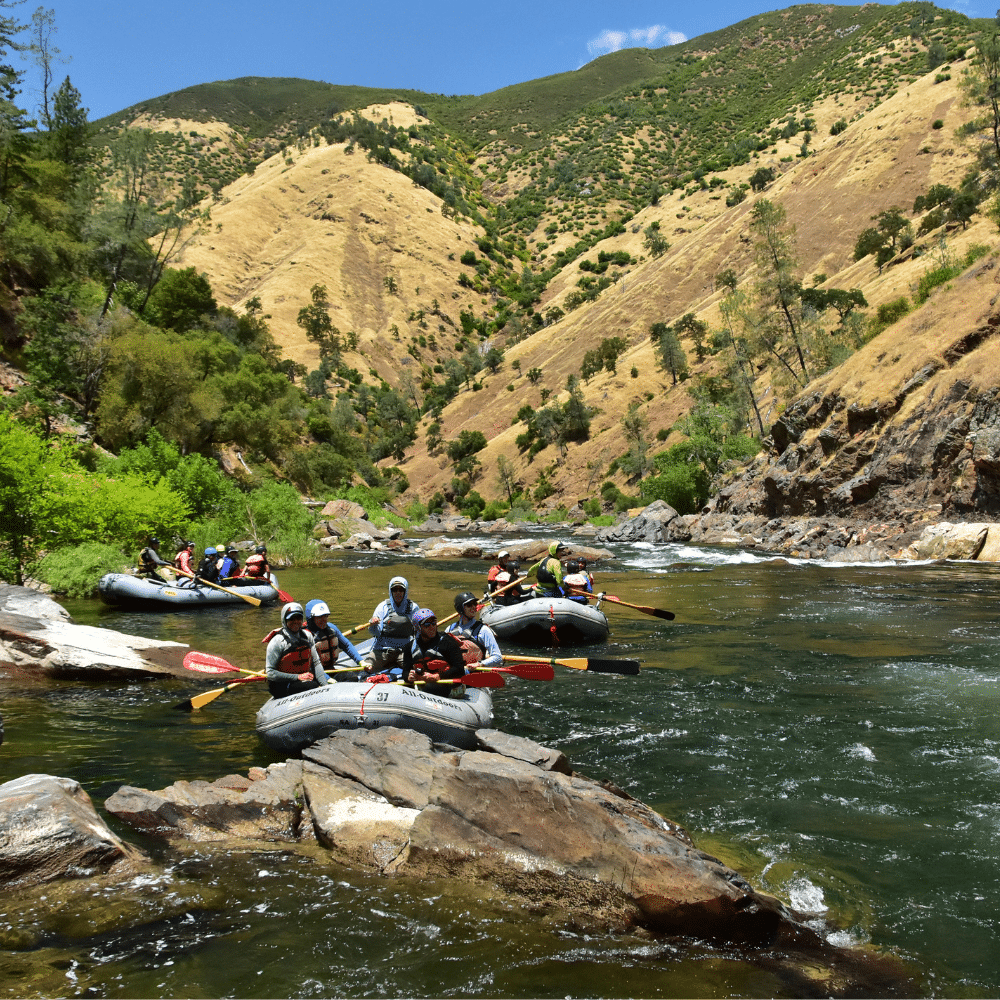
Wild & Scenic Tuolumne River
The national and state systems offer differing levels of protection and management. Rivers (or segments of rivers) can be added to these systems by acts of Congress or the state legislature, or in some cases by Governors successfully petitioning the Secretary of the Interior to add a state Wild & Scenic river to the national system. Some rivers in California are protected by only one of the systems, while others are protected at both state and federal levels.
Why does Wild & Scenic Matter?
Wild and Scenic designations are one of the best ways that we can help preserve river systems in their natural state, and protect them from damming, diversion, and development. Specifically, both the national and state systems protect rivers by prohibiting the construction of dams and associated reservoirs. These designations also help prevent new significant diversions from protected reaches. In addition, the national wild & scenic river system protects water quality and river ecosystems from pollutants and other threats. Federal and state actors, including land management agencies such as the Bureau of Land Management and Forest Service, must act within their power to protect the free-flowing character of designated rivers. In some cases, this includes the appropriate management of surrounding public lands.
There are 189,454 miles of river in California. The National Wild and Scenic River System protects 2,076 miles. The California State Wild & Scenic River System protects 1,485 miles. Together, a mere one percent of our state’s rivers are protected. FOR is fighting to change that.
Click HERE to see a map of National Wild & Scenic Rivers in California
Click HERE to see a list/map of all the State Wild & Scenic Rivers in California
What Wild & Scenic Work is Happening Now?
Friends of the River has been involved in every wild and scenic river campaign in California since our founding in 1973! Even when there are no active campaigns to designate new rivers, there is still work to be done. For example, defeating attempts to strip designated rivers of their protected status, providing input on the creation or updating of management plans, and working with agencies on adding new rivers to the state and federal systems.
California AB-43—a Success!
On October 7th, 2025, Governor Newsom signed into law AB 43, introduced by Assemblyman Nick Schultz (D-Burbank) and sponsored by Friends of the River. AB-43 (PRC § 5093.71) removed the sunset provision formerly in the California Wild and Scenic Rivers Act that allows the California Natural Resources Secretary to administratively include in California's Wild & Scenic Rivers System any National Wild & Scenic river in California where the Congress or the federal administration by Executive Order has removed federal protections from harmful dams, reservoirs, and diversions. Put simply, AB-43’s passing means that when any of the more than 18 California rivers and stream segments protected in the National Wild & Scenic System (but not in the state system) are threatened by Congress or the federal administration, they can be quickly incorporated into the state system. This could help ensure that the free-flowing status of our national rivers will remain protected by the State of California.
Raising Dams – A Threat to Wild & Scenic Rivers
Both the national and state Wild and Scenic River Systems explicitly prohibit the construction of dams or reservoirs on designated rivers. And yet, several designated rivers in California are currently facing the threat of expanded reservoirs. Shasta Dam (McCloud River), Don Pedro Dam (Tuolumne River), and New Exchequer Dam (Merced River) are all subject to current or recent pushes for increased reservoir storage capacity. Not only would these reservoir expansions drown even more of the rivers and river canyons that they currently block, the raising of these dams would be explicitly illegal under California or National Wild & Scenic Rivers laws.
Also, in a concerning development, the Pine Flat Dam (Kings River) is also being studied by the U.S. Army Corps of Engineers for a dam raise with the potential for impacts to the beauty and recreational uses of the Kings River canyon. At present, the study authorizes the investigation of invading the “special management area” created as a result of Friends of the River’s 1987 “three rivers” wild and scenic river campaign, but the Corps’ investigation could pave the way for Congressional proposals to undo the river protections established in 1987.
Visit our Deadbeat Dams section to learn how Friends of the River is fighting proposed dams on protected rivers – and what you can do to do help.