Hydropower is not “clean” energy.
We work to reduce its impacts on rivers.
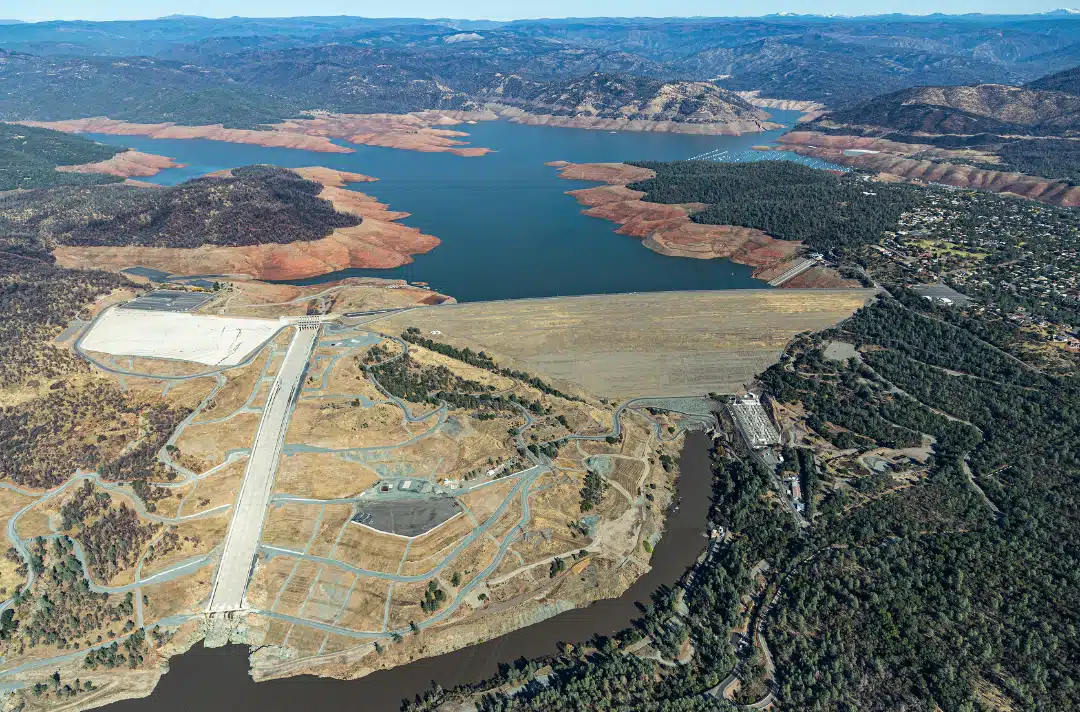
Hydropower is the use of falling or flowing water to generate electricity. Hydropower comes in many shapes and sizes but generally requires water to move through a turbine to generate electricity. This is typically done by building infrastructure in rivers, such as dams and diversions, which capitalize on elevation changes between the top of the reservoir and a downstream turbine. Energy produced is proportional to the flow volume times the height of the drop through a pipe into the turbine spinning below.
California has hundreds of hydropower projects owned by a mix of government agencies, public utilities, and private companies (e.g. Pacific Gas & Electric or Southern California Edison). Most of the major dams in the state produce hydropower, but with over a thousand dams in the state, not every smaller dam is built to produce hydropower. The infrastructure required to generate hydropower can be quite devastating to rivers and the communities that rely on them.
Hydropower Facilities Harm Rivers By:
-
-
- Disrupting natural flow patterns and the ecosystems that have adapted to them
-
-
-
- Blocking migration and access to habitat of native fish species, including economically and culturally important ones like salmon
-
-
-
- Turning pristine, flowing rivers into still reservoirs that increase water temperatures, grow algae, and drown magnificent river canyons
-
-
-
- Taking water from rivers and streams, putting it water into canals, tunnels, and pipes, then bypassing the natural waterways to feed the downstream power turbines
-
-
-
- Exposing downstream fish & wildlife to harmful fluctuations of temperature and dissolved oxygen concentrations
-
-
-
- Disrupting local economies, especially recreation-based ones, that depend on flowing rivers
-
-
-
- Destroying indigenous homelands, and cultural and religious gathering places
-
-
-
- Putting river recreators at risk from rapidly changing water levels
-
-
-
- Putting downstream communities at risk from failure of outdated hydropower infrastructure that is improperly maintained
-
While hydropower is an important part of California’s energy portfolio, its very real damage to the health of our rivers must be avoided or minimized, and past harms mitigated for.
Relicensing: Key to Change
Most non-federal hydropower projects must receive operating licenses, which last 30 – 50 years, from the Federal Energy Regulatory Commission. Most major projects in California received their first license before major environmental laws were passed, like the Endangered Species Act and Clean Water Act. Many of those projects are now up for “relicensing”— a process to update and renew the license. For these projects, this is the first time that environmental standards—which will last a whole generation—will be applied to their operations. This is a huge opportunity to create on-the-ground positive change for rivers.
Hydropower is Not Necessarily Clean Energy
The hydropower industry tries to get a free ride on the green movement by marketing hydropower as “clean” or “green” energy. This is far from the truth. Hydropower projects can degrade or destroy forest ecosystems, disrupt the carbon cycle, cause native species to become endangered, and alter and even destroy aquatic habitats downstream of a project.
Moreover, hydropower itself can be a carbon emitter. Certain project configurations and locations cause the emission of methane from reservoirs—a greenhouse gas that is 28-80x as potent as carbon dioxide. An industry with such damaging impacts cannot be considered inherently green.
Can Hydropower Be Reformed?
- FOR participates in hydropower project relicensings to ensure the best outcomes for rivers and communities. Usually, that involves environmentally better dam operations. Sometimes, however, dam removals are both feasible and the better approach. We’ve achieved both outcomes. Right now, we are focused on major projects on the Yuba, American, Tuolumne, and Merced Rivers. Showing up together makes us stronger.
- FOR advocates for better hydropower policies at the State and Federal level. This includes playing defense on recent efforts to reduce hydropower regulations and dismantle environmental laws.
FOR’s hydropower work is done in collaboration with many partner organizations, and as part of the Hydropower Reform Coalition.