California’s rivers and estuaries are home to many unique and charismatic fish and wildlife species that bring us joy, contribute to healthy ecosystems, and are economically important.
Fish
California has a variety of anadromous fish, meaning they migrate from freshwater rivers out to the ocean, before returning to freshwater to spawn (reproduce). Some species do this only once before dying (i.e. salmon), while others do it multiple times during their lives (i.e. sturgeon). Other, resident fish, like Delta smelt, spend their entire lifecycle in one area.
Chinook salmon (also known as “King Salmon”) are one of California’s most iconic species. Chinook are often called a “keystone species” because they have an outsized effect on river ecosystems. Born in fresh water, Chinook migrate out to the ocean as young, where they live and grow for several years, before returning to spawn (reproduce) in four distinct “runs” (see below), each timed to different river conditions throughout the year. These dynamic fish once climbed high into the Sierra mountain rivers to lay their eggs in clear, cold water before dying, transporting huge amounts of ocean-derived nutrients back into river ecosystems.
Chinook salmon fishing has been central to California’s economy for centuries, and Chinook were a primary food source for Indigenous Californians long before colonization. They also provide critical food for wildlife such as bears and eagles. Today, Chinook salmon face severe threats from dams, inadequate river flows, warming water, and habitat loss. The situation has grown so dire that the commercial Chinook salmon fishery in California was closed for 3 consecutive years in 2023, 2024, and 2025. Friends of the River works extensively throughout the Central Valley and North Coast watershed to improve flow conditions for salmonids and remove barriers to migratory fish passage.
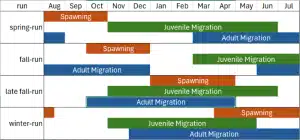
Source: https://casalmon.org/statewide-status/#fall-and-late-fall-run-chinook
Did you know that steelhead and rainbow trout are actually the same species? The difference is that steelhead (like salmon) are anadromous, but (unlike salmon) steelhead can make this trip multiple times. Rainbow trout, on the other hand, spend their entire life in freshwater rivers and streams. These differences in lifecycle also account for the physical differences between the two.
Both steelhead and rainbow trout are popular species for recreational fishing throughout California. There was once an important commercial steelhead fishery in our state, but population decline caused the fishery to close indefinitely. Rainbow trout and steelhead populations are often artificially supplemented by hatchery production of juveniles, which can cause problems with genetics and survival. Threats include dams blocking migration, limited access to high-elevation cold water habitat, and disease among hatchery fish.
It’s also worth noting that California is home and amazing diversity of trout varieties (species and subspecies), including our state freshwater fish the Golden Trout! Salmonids like steelhead and Chinook depend on healthy rivers and streams and are a priority focus for FOR’s efforts to improve stream flows and remove fish passage barriers on numerous rivers around the state.
Source: https://www.nwf.org/Educational-Resources/Wildlife-Guide/Fish/Rainbow-Trout-Steelhead
Source: https://wildlife.ca.gov/Conservation/Fishes/Coastal-Rainbow-Trout-Steelhead
Did you know that California has prehistoric fish? Sturgeon have existed in largely their present form for more than 200 million years, making it one of the oldest species in our state. Sturgeon are migratory and generally spend most of their lives in saltwater estuaries or in the ocean, and migrating back upstream to spawn in large freshwater rivers. Sturgeon often repeat this migration every 2-6 years and can often live for 80 to 100 years, growing to 10 feet or longer and weighing hundreds of pounds.
Sturgeon are popular among catch-and-release fishermen and anglers throughout the Central Valley and North Coast rivers. Commercial sturgeon fishing was prohibited in 1917 due to extreme overfishing and a resulting population decline. Population growth strongly depends on higher river flows, and long-term flow reductions combined with recent toxic algal bloom events have led to precipitous declines in sturgeon numbers. Friends of the River sued the US Fish and Wildlife Service in 2025 over its failure to take action to list the species.
Source: https://wildlife.ca.gov/Conservation/Fishes/Sturgeon
Pacific lamprey are the largest species of native lamprey found in California. These eel-like fish with scary mouths are anadromous and historically inhabited most of the major rivers along the West Coast, but much of their high-elevation habitat is now blocked by dams. Even though they look scary to us, they use their mouths to suction onto larger fish and even whales in the ocean, acting as parasites. Their migratory lifecycles are threatened by dams and other obstructions, as well as warm water caused by inadequate river flows.
Source: https://wildlife.ca.gov/Conservation/Fishes/Pacific-Lamprey
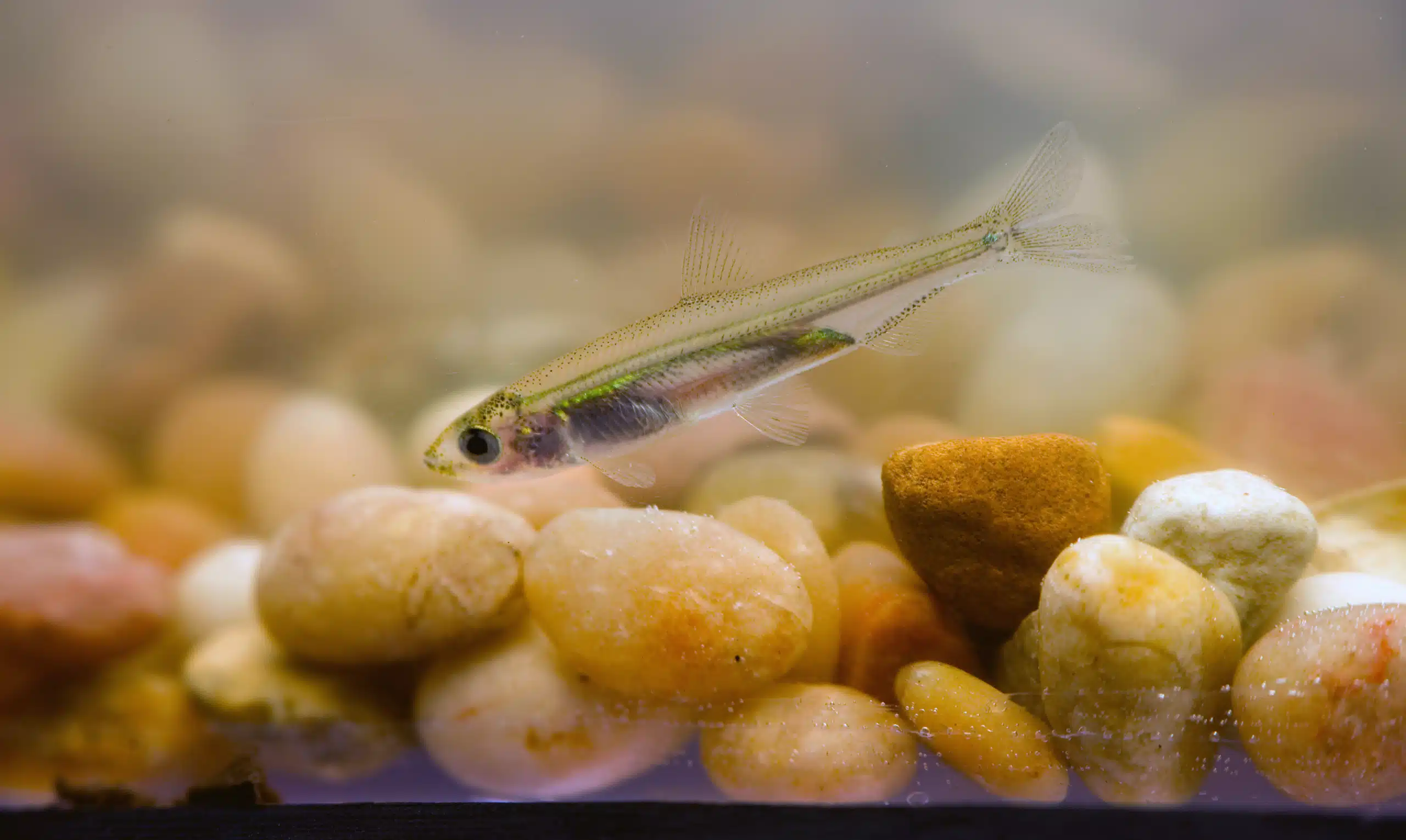
Delta Smelt exist nowhere else in the world except in the Sacramento-San Joaquin River Delta! The smelt moves between Delta habitats during its life: spawning in the freshwater river mouths, maturing in the low-salinity zones of the estuary, and then migrating back upstream to spawn. These tiny fish have a lifespan of only one year (sometimes two). At one time, the smelt were the most numerous fish in the entire Delta ecosystem! They tolerate a wide range of salinity levels, but despite their adaptability, Delta smelt are critically endangered.
Reductions in freshwater flows have greatly reduced the quantity and quality of the smelt’s brackish water habitat in the Delta. Exotic species invasions and increasing toxic algal blooms further degrade smelt habitat. Despite being protected under the state and federal Endangered Species Act, population levels are so low that no smelt have been detected in recent monitoring programs. Friends of the River recently sued the U.S. Bureau of Reclamation over violations of Endangered Species Act permit conditions for smelt and salmon, and is concerned the agency plans to abandon previous commitments to release water to expand smelt habitat in summer and fall.
Source: https://wildlife.ca.gov/Conservation/Fishes/Delta-Smelt
Birds
Osprey, which are located throughout California, are one of the primary riverine predators! Small relative to other raptors, osprey live and breed in close proximity to lakes and streams (as well as along the coast). Osprey feed predominantly on fish, which they catch by making swooping dives down to the water. Interestingly, osprey hold large prey face forward to reduce air resistance during flight. Even more interestingly, their talons can bend backward so there are two pointing forward and two backward—no other raptors can do this! Osprey nest in large trees and snags and generally feed within a 5-6 mile radius of their nests.
Source: https://nrm.dfg.ca.gov/FileHandler.ashx?DocumentID=1657
https://wildlife.ca.gov/Conservation/Birds/Bald-Eagle
Bald eagles live across most of North America and most often nest alongside lakes, rivers, and coastal wetlands. In California, the majority of breeding populations are in the northern part of the state, while there are more sparse populations throughout the Sierra. They are very large, with a 6-6.5 foot wingspan. They prey heavily on fish, which they snatch out of the water, but also feed on other birds and mammals. They can fly at speeds of up to 30 mph and can dive at speeds up to 100 mph.
Bald eagle populations reached an all-time low in the late 1960s when fewer than 30 nesting pairs remained in California. Chemical pollutants (most notably the pesticide DDT) were wreaking havoc on raptor populations and nearly contributed to the extinction of our national bird, and many other bird species in the U.S. The bald eagle was federally listed as endangered in 1967 (and listed by the state in 1971). Since then, populations are rebounding.
https://wildlife.ca.gov/Conservation/Birds/Swainsons-Hawk
The Swainson’s hawk has one of the longest annual migrations of any raptors, travelling from its nesting habitats in North America to as far south as Argentina for the winter. During migration, the hawks will gather in groups of tens of thousands, called “kettles.” In California, the Swainson’s hawk nests along rivers and streams, where they have tall trees for nesting and perches, and adjacent wetland or grassland habitat for hunting. Threatened across North America, some of the largest populations left today are in California’s Central Valley, Owens Valley, and in the northeastern part of our state.
The Swainson’s hawk has been listed as a threatened species since 1983. Habitat destruction in the open grasslands that they depend on for hunting—most often the result of intensive agriculture—have continued to impact the species. More recently, Swainson’s hawk populations have begun to rise as a result of intentional conservation efforts to preserve nesting habitat.
Mammals
Beavers are a classic example of an “ecosystem engineer.” Beavers shape their own environments, turning streams into meadows. These habitat alterations create niches for other species to thrive. Beavers dams not only help to expand wetland and riparian habitat, but they also improve water quality by effectively slowing and filtering waterways. These practices also help to reconnect streams with their floodplains, reverse the impacts of stream bed erosion, and also improve ecosystem resilience to wildfire and drought. Beavers were once among the most widely ranging mammals in North America and inhabited nearly every watershed in California! Beavers are still present in many watersheds across the state, but they need support returning to their previous habitats.
Source: https://wildlife.ca.gov/Conservation/Mammals/Beaver#conservation
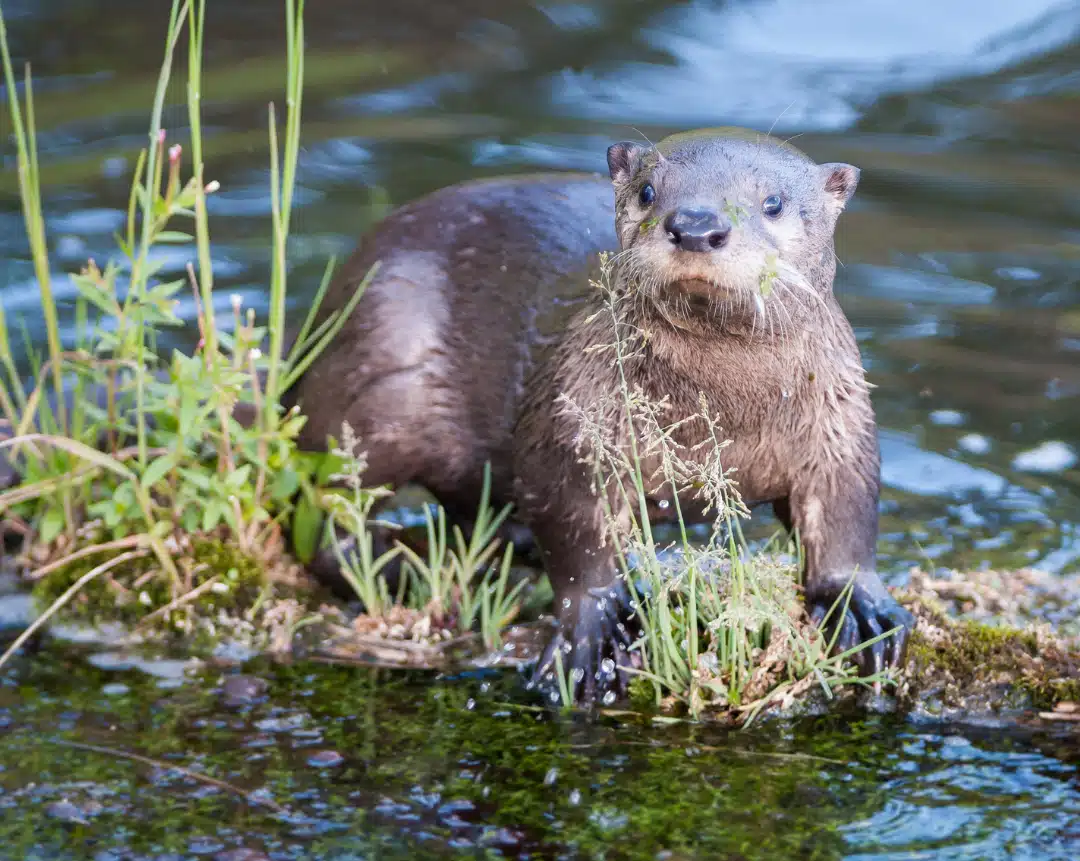
River otters are a furry and playful species found throughout most rivers in the state. Their thick fur keeps them warm while swimming in cold water, and their long tail helps propel them. In addition to being one of the cutest river-dwellers, river otters are also an “indicator species.” Otters are near the top of the food chain, and their food prey items (small fish, crustaceans) are highly sensitive to human impacts like pollution, temperature changes, and dewatering. Where otters are abundant, river conditions are generally healthy.
Source: https://data-cdfw.opendata.arcgis.com/datasets/15085ebdb6e14149b72081550be9fcbe_0/about
The salt marsh harvest mouse may be tiny, but it’s one of California’s most extraordinary locals. Found nowhere else on Earth, this adorable, cinnamon-colored mouse lives exclusively in the tidal wetlands of the San Francisco Bay-Delta. It’s a true marsh specialist—able to drink salty water, scamper through dense pickleweed, and even ride out high tides by climbing vegetation as the water rises. These mice depend on healthy, connected wetlands shaped by river flows and tides, making them a quiet indicator of how well our estuaries are functioning. Protecting aquatic ecosystems helps keeps this pint-sized survivor above water too.
Contrary to popular iconography, black bears do not generally sustain themselves on picnic baskets in California’s national parks. In fact, much of their food relies on healthy rivers! As omnivores, black bears eat a wide range of plant and animal life, including along riparian corridors where the berries, roots, and salmon are abundant.
Ranging throughout most of California, black bears occupy a wide variety of ecosystems. The areas of highest population density are in the North Coast, Cascade, and Sierra regions. Although black bears are not limited to riverine ecosystems in the same way beavers are, they are nevertheless an important species in the watersheds they inhabit.
Source: https://wildlife.ca.gov/Conservation/Mammals/Black-Bear