Why I Became a RAT, and Why You Could Too!

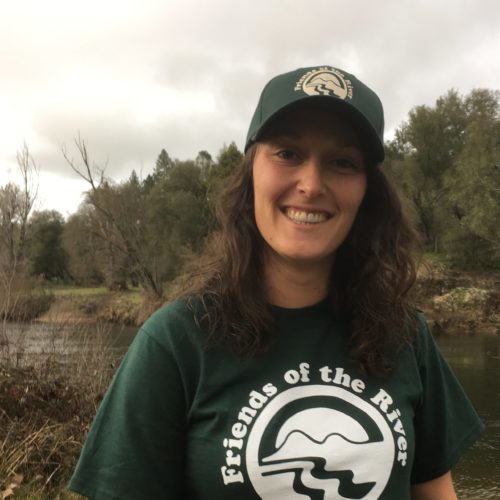
By Alicia Thompson, Cohort 2018.

Last December, the California State Water Board held public hearings in towns to gather local perspectives on amendments to the Bay Delta Plan. I attended with curiosity—albeit reluctantly—because a friend asked me. She had participated in the River Advocacy Training School (RATS) lead by Friends of the River to gain experience in river advocacy and policy. I didn’t know what to expect, but I wanted to be physical present at the hearing in support of wild flowing rivers, unadulterated lakes, and healthy California ecosystems that fuel my adventures and rejuvenate my soul. Even though I was nervous to speak in front of the State Water Board when I arrived, I walked away feeling extremely proud for standing up for California’s threatened rivers and the flora and fauna that reside in those habitats.

Even though I was nervous to speak in front of the State Water Board when I arrived, I walked away feeling extremely proud for standing up for California’s threatened rivers and the flora and fauna that reside in those habitats.

A few months later I discovered that Friends of the River was accepting applications for their next RATS cohort. At first I felt woefully uneducated in California’s water complexities to be an outspoken advocate for rivers, and I was reluctant to commit. However, I recalled my Water Board experience and the reward that came from being a voice for our threatened ecosystems. This wasn’t about me; it was about conserving wild landscapes for future generations. So I applied.

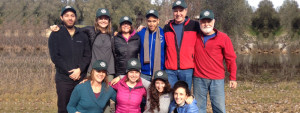
I was accepted into the River Advocacy Training School’s Spring 2018 cohort, and have enjoyed every moment of it. The training itself was phenomenal. I learned about the current issues and water bills flowing through our State Legislature, the history of water use in California, the rules and regulations of water right allocation, and the pitfalls of dam building. Separate than water education, we had lectures and presentations on recruiting for grassroots movements, registering voters, and amplifying our voices on behalf of rivers.

Separate than the training, the program has also provided me with numerous growth and challenge opportunities. Due to the extended nature of the program, I have been able to use trial and error methods to implement various recruitment strategies and outreach techniques. I have been able to coordinate and facilitate events, participate in neighborhood canvassing days, and network with water enthusiasts- all alongside a supportive cohort of river loving peers.

Overall, Toby and the RATS Program as a whole provides enough shape to be structured and enough flexibility that it fosters creativity and individuality.

Another highlight of the program for me has been the encouragement and mentorship that I have received from Toby, the Program Coordinator. The program is designed to provide space for weekly check-in’s with her, which have proven invaluable. She listens to my goals and struggles, and is constantly trying to make this a positive and growth-oriented experience for everyone involved. She encourages me to step out of my comfort zone and challenge myself, while also providing organizational, logistical, and emotional support. Overall, Toby and the RATS Program as a whole provides enough shape to be structured and enough flexibility that it fosters creativity and individuality. I have felt adequately challenged and comfortably supported during the entire process.

It can be daunting to embark on a multi-month journey, as well as feel powerful and knowledgeable enough to make a difference in the turbulent California water world. However, now, more than ever, our wild landscapes need representatives. The RATS program will give you the tools and inspiration to activate yourself and others in conserving our threatened riparian habitats and recreational spaces. I want to encourage all of you to think about applying to the upcoming RATS Fall 2018 cohort, or another cohort in the future. California’s gorgeous rivers could definitely use your help!

Learn more about how to apply.

River Advocate |Volume 6, Issue 6 |August 22, 2016

Volume 6, Issue 6

This issue includes:
  • FOR News
  • Action Alert–action need now!
  • Get Involved!
  • River Currents
  • Calendar
FOR News
  • FOR ‘points positive’ with the first annual Paddle to the Capital!
    PTC11

    Leg 1–Chili Bar Run

    Six days of paddling on the American River connected Coloma to the Capital through the work of over 100 paddlers. The event built our river community, exceeded the $10,000 fundraising goal and enables FOR to continue our work to ‘point positive’ for water solutions that protect rivers.

    Big thanks to our paddlers, supporters, volunteers and sponsors! Mother Lode, Adventure Connection and American River Raft Rentals donated shuttle services. Mystic Design created the event’s logo. Squally’s discounted dinner in Coloma and Rubicon hosted the ‘Pint Positive’ party in Sacramento. A shout out to our top fundraisers: Tom Biglione, Roger Akers and Ron Stork! 

IMG_0738

Leg 5–River Fairies passing out cookies on the American


  • Friends of the River wins litigation against Delta Stewardship Council on May 18th, 2016The Delta Plan was invalidated by the Superior Court, County of Sacramento, in its 73-page ruling in the Delta Stewardship Council Cases. The court found the Delta Plan (adopted by the Delta Stewardship Council) violated the Delta Reform Act because it: 1) failed to include quantified or otherwise measurable targets associated with achieving reduced Delta reliance (Ruling p. 12), 2) failed to include quantified or otherwise measurable targets associated with restoring more natural flows (Ruling p. 36), and 3) failed to promote options for water conveyance and storage systems. (Ruling pp. 38, 72).

The lawyers defending the Council tried the old trick of snatching victory from the jaws of defeat in the guise of filing a motion seeking to “clarify” the court’s ruling. They got clarification all right. On June 24, 2016 the court “clarified” it’s earlier Ruling, by determining: “To be clear, the Delta Plan is invalid and must be set aside until proper revisions are completed.”

This was the first case filed (June 2013) to litigate issues involved with the government’s efforts to develop the Delta Water Tunnels greatly diminishing freshwater flows through the lower Sacramento River and San Francisco Bay-Delta estuary. We won the first round but this is looking like a 15 round heavyweight championship fight.

  • California Water Commission hearings this week

The legislature and the voters of California have charged the California Water Commission (CWC) with handing out $2.7 billion in taxpayer subsidies for the supposed public benefits (real or otherwise) of dams or other water storage projects in California.

It wasn’t the best of ideas. Indeed, it was a spectacularly bad idea.

The Commission intends to finalize its regulations on handing out the money for studies and construction this year.   For those who want to sweat the details, the Commission will be holding some public briefings on an about-to-be-released 500-page technical-information document at the end of August, as well as briefing the Commission on the staff recommendations for the regulations and other associated documents at their regular meetings.

The August meetings are Aug 23 at 1 p.m. in FresnoAug 25 at 1 p.m. in Auburn (is Auburn dam coming back?), and Aug 30 at 10 a.m. in Pleasant Hill.   You can find the details of all of these meetings at the Commission’s website:   https://cwc.ca.gov/Pages/Meetings.aspx

Action Alert

Urge the Forest Service to choose Alternative C—write them now!

The future of some of the best whitewater rivers in the Sierra Nevada and more than 4 million acres of public land will be decided in the revised management plans for the Inyo, Sequoia, and Sierra National Forests.

Dinkey Creek near Dinkey DomeThe U.S. Forest Service has released for public review and comment draft management plans that address many different land and resource management issues—including the protection and management of rivers, streams, and watersheds.

At stake are unprotected segments of the Kings and Lower Kern Rivers, which provide outstanding whitewater recreation for thousands of visitors every year. In addition, the Forest Service management plans will decide how much development (road building, logging, mining, etc.) will occur in the unprotected watersheds of some of California’s most cherished Wild & Scenic Rivers, including the North and South Forks of the Kern River, the designated upper segment of the Kings, and the beautiful South Fork Merced.

The good news is the Forest Service has identified in the draft plans nearly 870 miles of streams eligible for Wild & Scenic River protection, including 633 miles on the Sierra Forest, 160 miles on the Inyo Forest, and 76 miles on the Sequoia. Kern River Lower Seq Forest

Public comments on the draft plans are due by August 25, 2016. To protect these rivers and their watersheds, we need hundreds of emails from concerned river lovers to the Forest Service urging adoption of an improved Alternative C. 

Tell the Forest Service to select Alternative C!

Get Involved!
  • California River Awards |October 21st, City Club, SFPlease join Friends of the River on Friday, October 21st at the spectacular City Club of San Francisco. This year’s event will benefit FOR’s campaign to ‘Point Positive’ towards solutions that create a dynamic and resilient water future for California. As always, you can expect delectable food, fine wine, and all too tempting silent & live auctions.TICKETS ON SALE — Friday, Sept. 2nd  www.friendsoftheriver.org

    Become an event sponsor! Phone: 916-442-3155 x214 Email: Mandi@friendsoftheriver.org

  • Amazon Wish List
    Did you know Friends of the River has a wish list? Purchasing items from our Amazon wish list is a great way to support Friends of the River! Your gift will keep our costs down and is fully tax-deductible.
    What can you give? Look now! https://amzn.com/w/2F2YNMA94DHEK
  • ‘Float our Boat!’
    Ever joined FOR for a day rafting? We are glad you did! FOR needs to purchase a new raft to continue to share the experience with people next year.NRS is offering us a new boat at almost wholesale, but is still a whole lot of money ($3500) to get a whole new boat (look at it!)! We raised $750 this summer. Donate now! Please share the magic by making a donation.  Think of it as helping create the next river lover by making sure there is a seat in the boat for them.
River Currents by Ron Stork

Traveling and Talking 

Ron muses about some completed and scheduled speaking engagements on the topic of Big Storage (big dams). He’s not a big fan. Big Storage is also on the minds of the California Water Commission as they prepare to finalize the rules for giving away billions to the big dam supplicants. It should be on our minds too.

I’ve been getting around the state a bit recently.  Naturally, folks are asking about the “bounteous blessings” that will come from the billions of taxpayer dollars that will be spent on “new storage” in the coming years.

Well, they’ve come to the right person for that. So I refurbished the PowerPoint presentation we gave to the legislature this spring, titled it “Big Storage,” and addressed a recent gathering at the Metropolitan Water District of Southern California. Among the listeners were my fellow panelists, the chair of the California Water Commission and the head of the California Department of Water Resources’ water storage investigations.

The best part about these presentations is the questions. And the dialog started right away with a statement from one of the audience. “We’ve got to do something about the embarrassment of spending so much and getting so little water from these dams.”

What he meant is that we’ve got to find a way to tweak the operations to jack up the water yield numbers — and a lot.

Understandable, but I had to reply that the arithmetic had already been done. The yield estimates were what they are. That’s the problem with the tyranny of arithmetic, it can expose the sales hype of the aspiring dam builders.

It’s only too bad that those questions weren’t asked by the legislature before they put Proposition 1, the California Water Bond, on the ballot. But enough of that.

More of us need to get out on the speaking and public-discussion circuit and committing truth. One of the important messages is pretty simple — but fundamental: you just can’t dam your way to Paradise in California anymore. Once we all understand that, a more realistic water management public dialog can begin.

Oh, and maybe rivers should be valued for more than the water that can be diverted from them.

So taking my own advice, I’m scheduled for a September 15th presentation at the Merced Group of the Sierra Club, United Methodist Church, 899 Yosemite Parkway, Merced, 7 p.m. 

I’m also scheduled to join Peter Gleick from the Pacific Institute and Daniel Curtin, member of the California Water Commission, at this year’s environmental law conference in Yosemite National Park on “Water Storage, Conservation and Optimization: What is Most Needed for California’s Future.” It’s on Friday, October 21st, from 9:15am to 10:45am. It could be fun.

Take a peek at Ron’s PowerPoint slides–a great way to learn more.

Calendar
  • August 25th | Last day to comment on the Inyo, Sequoia and Sierra National Forest EIS. Write a letter now!
  • September 2nd | California River Awards tickets go on sale
  • September 10th & 11th |  FOR Gear Swap, Friday 6-9 pm (gear drop off), Saturday 8 am (gear drop off) and 9 am- 4 pm Gear Swap, Sunday 8 am-12 pm.
  • September 15th | 7 pm, United  Methodist Church, 899 Yosemite Parkway, Merced, CA  Ron Stork gives a presentation at the Merced Group of the Sierra Club.
  • October 21st 9:15am to 10:45am, “Water Storage, Conservation and Optimization: What is Most Needed for California’s Future.” Ron Stork is speaking. Environmental Law Conference, October 20-23.
  • October 21st |California River Awards, City Club, San Francisco
  • November | Salmon Run: a 5K run to Spawn the Next Generation | info coming soon…


Thank you for supporting rivers by staying informed.   We can’t wait to see you at our next event or talk!

Sincerely,

the FOR Staff–Eric, Ron, Mandi, Bob and Toby


River Advocate Vol 6 #1 March 10, 2016

The River Advocate
March 10, 2016
Vol 6, #1

In this issue…

A New Website for FOR
River Rats: Now Recruiting!
Capitol River Awards on May 18
2nd Annual California Rivers Day
River Currents by Ron Stork


Johnnie_Carlson_FOR_Operations_DirectorA New Website!
Johnnie Carlson, Operations Director

On January 30th Friends of the River moved to a new WordPress website and began using Constant Contact for our email communications with you. We made the move for a number of reasons including making our website responsive so you can easily view and use it on your smart phone or tablet. We are now working with an easier to use open-source web platform so all our staff can add content and volunteers can now help build our site as well. We have incorporated a blog and plan to roll out new functions and content over the next few months – so stay tuned. The new site is not only more functional and easy to use – it is on its way to helping FOR save money too!

Check it out and we welcome any and all your feedback as we work to further improve the site for people who love California’s rivers just like you!

PS We are looking for volunteers to adopt and build a page for each river in California – if you would like to help or know someone who would – let’s get in touch – email me at jcarlson@friendsoftheriver.org.


Tobb_Briggs_FOR_Engagement_Coordinator2River Rats – FOR Opens Recruitment for Our 2nd Class – Applications Due April 1st
Toby Briggs, Engagement Coordinator

FOR is building a more powerful grassroots base this year by launching a new River Advocacy Training School and we are now accepting applications for our second class for 2016. The six-month program trains and empowers the next wave of advocates (that’s you), to be leaders in river protection and sustainable water policy in California. We are recruiting talented college students, community activists, and staff from other river-related organizations in California to join this select team. The next class starts May 2016 and applications are due to FOR no later than April 1, 2016.

river-ratsRiver RATS will learn about water policy, grassroots organizing, river ecology, and natural history from experts in the field (meet the trainers) through two 3-day trainings at Camp Lotus along the beautiful American River. They gain valuable hands-on experience by organizing events and activities to engage people in the river protection movement. River RATS attend FOR’s Guide School to become a whitewater rafting guide or canoeist.  With this background, River RATS support the programming during the summer. In the fall, River RATS use these skills to create event(s) in their communities.  See the River RATS webpage to discover what kind of RAT you could be!

Meet the Students in the Winter 2016 Class                                          Learn More/Apply


Mandi_Garcia_FOR_Development_DirectorCapital River Awards
SAVE THE DATE – May 18, 2016
Mandi Garcia, Development Director

Friends of the River (FOR) is pleased to announce the Capital River Awards to celebrate our treasured rivers and promote their protection. This festive event is a great chance to re-connect with old friends and make some new ones over great food and wine just steps from the Capitol. Join us for a fun and inspiring evening to honor and recognize Senators, Assemblymembers, other state and local officials, and long-time river advocates for their work to protect California rivers. We will also be celebrating our hard work at California Rivers Day at the Capitol — a day of education, outreach, and legislator visits to emphasize the importance of protecting rivers through smart and sustainable water management. This party is sure to be a
great time! You don’t want to miss it!

What: 2016 Capital River AwardsSupport-FOR-contribute-5
When: Wednesday, May 18th
5:30 pm to 7:30 pm
Where: Capital Plaza Ballrooms
1025 9th St., Sacramento, CA 95814
Why: A great gathering of river-loving folks celebrating California’s rivers and the people working to protect them!

If you have questions, please contact us at:  capra@friendsoftheriver.org or call us at 916-442-3155 ext. 214.


Eric_Wesselman_FOR_Executive_Director2nd Annual California Rivers Day at the Capitol in Sacramento: May 18, 2016
Eric Wesselman, Executive Director

Join Friends of the River and over two-dozen other river groups and businesses to celebrate the 2nd annual California Rivers Day—an education, outreach, and activism event featuring rivers at the State Capitol.  Our goal is to continue expanding the river protection movement in California because rivers need a stronger voice in the halls of power. The severe and persistent drought has unleashed an intense push to take us back to the era of big dam building and weaken protections for our waterways.

This day will bring at leasFOR meets with Senator Ted Gains t two-dozen river groups, businesses, and dozens more individual activists like you together from across the state, along with our supporters, to convey the magic of rivers and sustainable water solutions.  The day begins with a Legislative Breakfast followed by the California Rivers Fair at the Capitol coupled with a press conference and meetings with legislators. That evening we’ll celebrate our hard work at the Capital River Awards just steps from the Capitol (Scroll to the bottom for the highlights of the day).

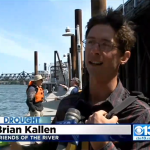
brian kallen gets some TV timeYour participation will give the day greater statewide impact. Our unique political power as people who care about and speak for our rivers is our statewide presence—there are rivers,
creeks, or streams in every legislative district in California along with people just like you who care very deeply about these treasures. This day will bring our message to our state’s leaders.

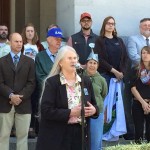
Katherine Evatt speaks to the pressI truly hope you will be able to join us to celebrate our rivers and educate decision makers. It’s time for all of the rivers of California to make their presence known in the halls of the State Capitol and we would be honored to have you participate. If you would like to get on our invite list or would like more information email Johnnie Carlson, California Rivers Day Coordinator at jcarlson@friendsoftheriver.org or call us at (916) 442-3155 ext 211.


river-advocate-8-ron-storkRiver Currents
Ron Stork, Policy Director

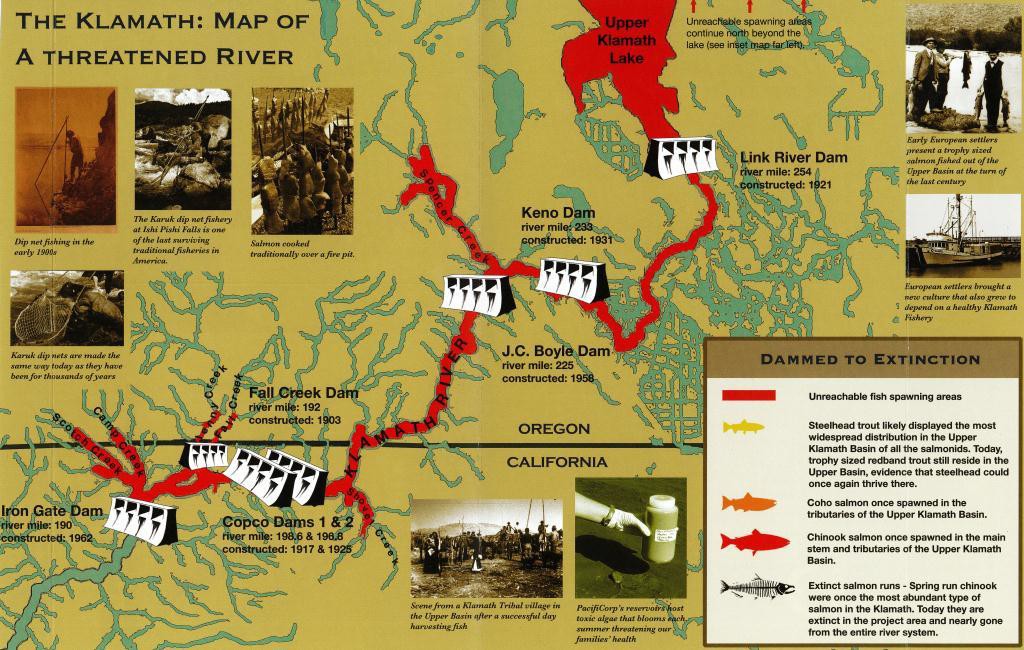
Klamath River, A Light at the End of the Tunnel

As we’ve noted before, the near consensus for many years that four of the Klamath River dams (J.C Boyle, Copco 1 & 2, and Iron Gate) need to come down did not include the GOP-led Congress. Unfortunately, the agreement to take them down required an act of Congress. Well, no help there.

But finally, late last year the California Water Resources Control Board decided that everyone had waited long enough and resumed its part of the dam relicensing process that could result in the removal of these dams. It promises a draft environmental impact statement in 2016 with a final in 2017. There’s reason to hope that it will be a good one. (See some comments from some of the good guys on what should be in it: FOR Klamath commentsSierra Club Klamath comments – KHP Scoping Comments (Conservation Groups))

The Klamath River is a key California watershed. Reduced flows and poor water quality from Federally irrigated farms upstream, as well as the downstream dams, have hammered its fishery during droughts of the last two decades.

In some of those years, there have been season closures and harvest restrictions of the nearby ocean Chinook and coho salmon sport and commercial fisheries. In-river Chinook and coho salmon sport fisheries and Native American commercial and subsistence fisheries were similarly affected.

klamath map

Hydro on Steroids?

For years Friends of the Rivers and a small group of colleagues from other conservation groups have labored to change the rules (and even the existence itself) of dams being relicensed by the Federal Energy Regulatory Commission (FERC). That’s pretty much every dam that generates hydroelectricity except for dams owned by the Federal government.

For most of this time, the dams and diversions being relicensed in California’s Sierra Nevada have been in the mountains, isolated from the ocean-going salmon and steelhead trout that once may have spawned there by the great dams and their afterbays perched on the rim of Sierra foothills above the Great Central Valley.

Some of these rim dams are under the jurisdiction of FERC, and now dams on the Yuba, Tuolumne, and Merced are undergoing relicensing. These dams control what water flows into rivers in the Valley and what water flows into fields and cities.

At the same time, the State Water Resources Control Board (SWRCB), implementing both state and federal law, is undertaking an update of the state’s water-quality control plan for the Sacramento-San Joaquin River Delta, which obviously involves the rivers that feed into it. And both the legislature and the Governor want the Board to update the state’s regulation of rivers tributary to the Delta.

For the last few months, the state’s Natural Resources Agency has been asking federal agencies, water districts, and environmental groups active in FERC relicensings and SWRCB proceedings to join with state agencies and see if we can figure out how to resolve the outstanding issues of flow and the success of fisheries important to the state on rivers and streams tributary to the Delta and the Delta itself. In 2016.

Yep, 2016. That will be a tall order. Perhaps a foolhardy errand given the history of California water. But so far no one has said no. Stay tuned, but if you care about a big Central Valley River, it’s probably time to get engaged and in the loop. After all, rivers need friends.

Feinstein Moves to Authorize the Big (and little) Dams

Senator Feinstein has long believed that California can continue to dam its way to Paradise and make the deserts bloom. All it takes is some subsidies.

So her “drought” bill to complement the subsidies for dams in the recent California water bond (Proposition 1) has been much anticipated — with lust in their hearts by some and dread in others of a more river-friendly persuasion.

Her bill (S.2533) does not disappoint. She would authorize the Secretary of the Interior to participate in any federal water-storage project for which 50% of the funding is provided by others (to match the maximum funding for many types of projects in the California water bond) and meets other requirements of the bill. It permits the Secretary to fund any water storage projects by others up to 25% if requested by the governor of a state (and other bill requirements). And it establishes a new Federal bank administered by the U.S. Bureau of Reclamation to compete with the existing (and presumably more careful capital markets) in financing water projects.

As a start, S.2533 gives the Secretary $600,000,000 dollars of authority and $200,000,000 of working capital for the new bank.

It’s a radical bill. It breaks traditional notions of which projects are authorized and which are not (Congress used to do that), as well as provide Federal financing for purposes that are unexamined by the Congress.

This bill could move through the Senate, perhaps included in Alaska Senator Lisa Murkowski’s omnibus western water bill, then be married to an even worse House “drought” bills.

If passed, we better pray for a string of good Secretary of the Interiors (reminding us that elections really do matter).

Oh, and the bill also invents a novel way to “pay” for the projects — deauthorizing previous dormant federal projects such as Auburn dam (although that’s a good idea!), projects for which the Federal government did not currently intend to spend money on. It’s like paying for some luxury yacht by not buying an even more expensive one. Might work in your mind but not in your bank account.

The Senate held hearings last week; we weren’t invited to testify, of course. It would have created some dissonance (and some sparks) if we could have had a voice there. Perhaps that’s why we weren’t invited.

Of course, that doesn’t prevent you from talking to the Senator or your Congressman or your local newspaper editor or…the list can go on. The world is not run by timid people.

(For a deeper dive into components of this bill, see my candid memo, a copy of the bill, and my memo on the troubles that Reclamation believes face its proposed Shasta Dam raise.)


The River Advocate is published by Friends of the River. Questions or comments – please email us at: info@friendsoftheriver.org.

The River Advocate: Volume 5, Number 9

Do you Know a Future River Hero?
If so Friends of the River has the opportunity of a lifetime for them.

Eric Wesselman, Executive Director

FOR is launching the River Advocate Training School this January to training the next generation of river advocates in the arts of grassroots organizing, river ecology, and policy activism. The intensive training academy will feature both inspirational presentations as well as in-depth education seminars. This training is free to all applicants accepted into the program and there are 15 openings available. FOR is targeting students and outreach efforts at UC Davis, Sacramento State, Stanford, Chico State, The Los Rios Community College District Campuses, UC Merced, Fresno State, CSU East Bay, and Stanislaus State. In addition, there are openings for community-based participants in the Bay Area, Central Valley, and Sierra Foothills as well as individuals with river-based organizations from across California. Graduates of the training will be able access funding for local outreach and organizing projects from FOR and campus based participants qualify for stipends from FOR during the school term.

Applications are due by November 23rd.
More details and the application can be found at:
www.friendsoftheriver.org/riverrats


California River Awards: A Night to Remember!

Mandi Garcia, Development Director
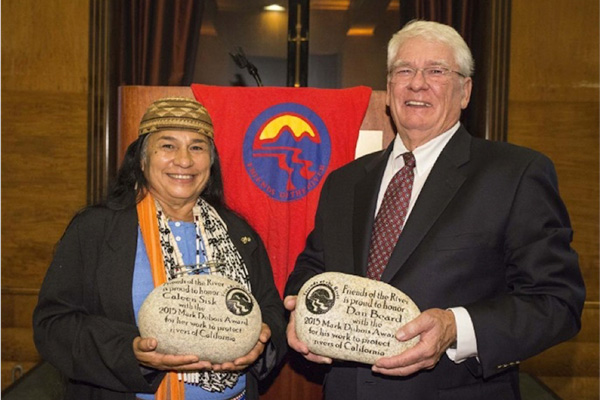
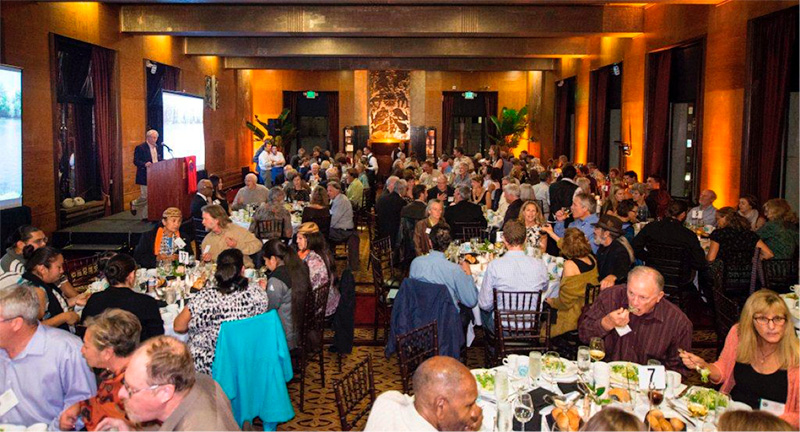
river-advocate-1-awards-nightFriends of the River’s California River Awards at the City Club of San Francisco on October 23 was a resounding success! The evening featured fantastic food and wine, live entertainment, and a fabulous live and silent auction, all in support of California’s beautiful rivers. We were joined by almost 200 sponsors and guests in celebration of our rivers and to honor the heroes that keep them free and flowing.

Mark Dubois Honorees
This year FOR honored Caleen Sisk and Dan Beard.  Caleen is the Spiritual Leader and Tribal Chief of the Winnemem Wintu Tribe who practice their traditional culture ceremonies in their territory along the McCloud River in Northern California. She has focused on maintaining the cultural and religious traditions of the Tribe as well as advocating for California salmon restoration. FOR is working with the Winnemem Wintu to save the McCloud and upper Sacramento Rivers from plans to raise Shasta Dam.

Dan Beard penned the recently released book Deadbeat Dams, and declared “the dam building era is now over” while serving as the Commissioner of the U.S. Bureau of Reclamation in President Clinton’s first term. Dan reorganized the Bureau to pivot away from dam building to promoting water conservation and environmental restoration. He also served as Staff Director for the House Interior Subcommittee on Water and Power where he helped advance the work of river champion, and former CRA honoree, Congressman George Miller.
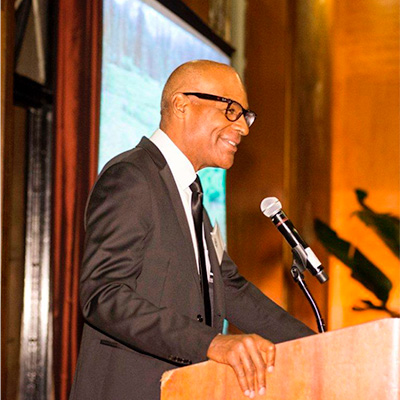
river-advocate-1-michael-dornSpecial thanks to Michael Dorn for serving as our Emcee!

One would think that the man who bears one of the most unique accomplishments in Star Trek history—he has appeared as the same character in more hours of Star Trek than any other actor—would be instantly recognizable to the public.  But thanks to the wigs and prosthetics he was forced to don as Worf, Michael Dorn is more likely to pass through a crowd unnoticed than any of his cast mates from Star Trek: The Next Generation or Star Trek: Deep Space Nine.  That is, until he opens his mouth:  Dorn’s distinctive baritone voice is always a surefire giveaway, and has been heard not only on TNG and DS9, but also in dozens of  animated series, computer games and television commercials.

Thank You Michael!


Get Your Cameras Ready!

Johnnie Carlson, Operations Director
river-advocate-3-get-your-cameras-ready

With the coming El Niño we might be in for a wet winter and beautiful spring wildflowers in a California river canyon with endangered rivers. Let’s make sure your out getting images or video of those special places so we can share majesty of these treasures here at FOR with others and the media! Share your images with info@friendsoftheriver.org.

river-advocate-4-delta-watersProgress in Delta Tunnels War

Bob Wright, Senior Counsel

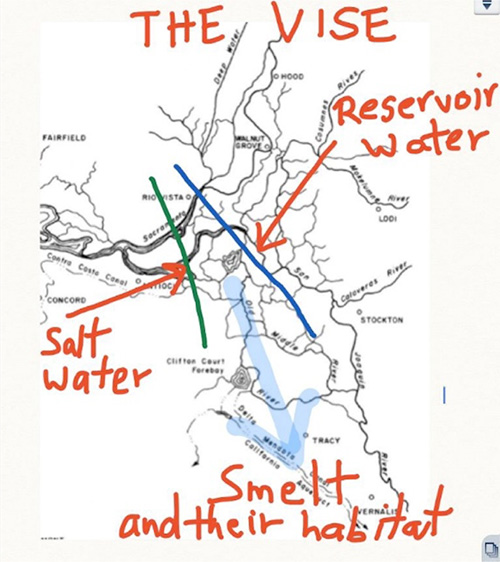
The health of the San Francisco Bay-Delta is critically important. Friends of the River (FOR) is a David fighting many Goliaths in the ongoing war to save the Delta from the Water Tunnels. The project, previously called the Bay Delta Conservation Plan (BDCP) is now, after the positive features including wetlands restoration were dropped, called the California Water Fix. The Tunnels would divert enormous quantities of water from the Sacramento River near Clarksburg, California. As a result of this massive diversion, the freshwater that presently flows through designated critical habitats for crashing fish populations in the Sacramento River and sloughs to and through the Bay-Delta before being diverted for export at the south Delta, would no longer reach the Delta. The benefits of those freshwater flows for Delta water flows and water quality, fish, and fish habitat would be lost.

This is a long war. With the close of the Water Fix comment period on October 30, 2015, we have had some successes. Our work over the past two years in encouraging the Environmental Protection Agency (EPA) to stand up for the National Environmental Policy Act (NEPA) and water quality helped result in the October 30, 2015 EPA review grade given to the Water Fix Supplemental Draft Environmental Impact Statement (SDEIS). The EPA gave the Water Fix Plan’s SDEIS a rating of “’3’ Inadequate” (letter, p. 4) which is the EPA’s failing grade for a federal EIS. The EPA concluded that deferral of water flow management decisions means “that any attempt to describe the environmental impacts of the project is necessarily incomplete.” (Letter, p. 2). EPA also found that the “SDEIS predicts a loss of valuable aquatic habitat for many fish species in the Delta and upstream tributaries due to the combined effects of the Water Fix project, CVP/SWP exports, climate change, and increased water diversions upstream of the Delta in the Sacramento River Basin. These species have experienced sharp population declines in the last decade and showed record low abundance over the last five years.”
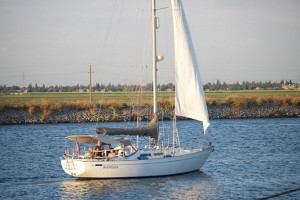
river-advocate-5-delta-watersWe have already addressed EPA’s failing grade in our joint letter with the Environmental Water Caucus to the Army Corps of Engineers on November 4, 2015. There, we declare that since the Draft environmental document prepared by Reclamation and the Department of Water Resources is proven to be inadequate as determined by the EPA, the Corps will have to prepare its own legally sufficient Draft EIS before considering the permit applications filed with the Corps that would advance the Water Tunnels. We will soon be taking the same position in the State Water Resources Control Board (SWRCB) process that will determine whether to permit the new upstream diversions for the Tunnels.

We have also for almost three years now, been calling upon the federal and state agencies involved in the BDCP/ Water Fix process, to complete the required consultations and obtain biological opinions from the National Marine Fisheries Service and U.S. Fish and Wildlife Service under §7 of the Endangered Species Act (ESA) before rather than after making decisions whether to approve the Tunnels. FOR was the first organization to recently call upon the SWRCB to obtain ESA compliance before rather than after making its decision whether to approve the new upstream points of diversion necessary to construct and operate the Water Tunnels. We have been successful. On October 30, 2015, the SWRCB announced that Part II of the hearing, focusing on the potential effects of the diversion change on fish and wildlife and recreational uses “is not planned to commence until after the environmental and endangered species act compliance processes are completed.”
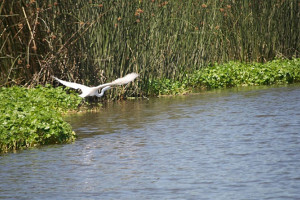
river-advocate-6-delta-watersHappily, the bullets in this war over the Tunnels are words and paper. But the outcome of the war will indeed be a matter of life and death for endangered and threatened fish species including Winter-run and spring-run Chinook Salmon. We win some battles, we lose some battles. The fight goes on and every FOR member and supporter can have a place in the struggle to win the battle for the hearts and minds of Californians. The growing public opposition to the Tunnels has been a huge factor in this being a fight rather than a cakewalk for the Tunnels and their supporters. The other side has money and power. What we have is the truth— the Water Tunnels would be very bad for northern California rivers and the Delta.


Make a River Smile this Holiday Season! FOR’s Outreach & Office Wish List

Johnnie Carlson, Operations Director

Working with a non-profit budget means always striving to keep overhead and expenses low to ensure that our river protection and outreach programs are always our top priority. FOR has postponed or decided to forgo the purchase of the following items – and maybe you can help us! If you have an item(s) on our wish list that you can donate, or would like to purchase and donate to FOR contact Johnnie Carlson at (888) 464-2477 extension 211 or by email to: jcarlson@friendsoftheriver.org
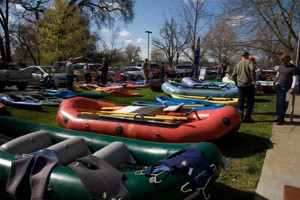
river-advocate-7-outreach-itemsOutreach Items
Roll-a-tables (useable)
Self-bailing Rafts (useable another few seasons)
Flat-water Canoes (useable)
Flat-water Kayaks (useable)
Adult Universal PFD’s (new or very good condition)
Whitewater Helmets  (safe & useable)
Guest Rafting Paddles (decent shape)
Canoe Paddles (decent shape)
Kayak Paddles (decent shape)
2×6 or 3×8 folding tables (solid & in good condition)

Office Equipment/Technology
MacBook Pro (2012 or later – refurbished is OK)
LED DVD/Computer Projector (working)
GoPro Hero Camera (version 2 or better)
GoPro Hero accessories (mounts, straps, battery, etc)

river-advocate-8-ron-storkRiver Currents

Ron Stork, Policy Director

Deadbeat Dams go on National TV
I’m glad the PBS News Hour was able to do a seven-minute report-from-the-field piece on the California dam controversies. And I’m glad they included some critics — including me.

After all, the U.S. Senate and House hearings on the California drought bills (H.R. 2898 and S. 1894) that “authorize” construction of new “storage” — i.e., more river landscapes destroyed for little gain — failed to include anyone opposed to such things.

But someone has to tell the truth: that building dams on already overtapped rivers gains little for the huge investment. Someone has to report that the dams are popular in some circles only because they are being built with other people’s money. But as far as the press coverage for the last few years, no one did.

Common sense voices were not in demand. And so they weren’t heard.

The result, $2.7 billion in free money for dams in Proposition 1 passed by the voters, and the California drought bills poised to be passed in the United States Congress that “authorize” any Federal dam that can get a 50% cost-sharing partner (and a 25% Federal subsidy for non-Federal dams from Uncle Sam too — and a special federal bank to help finance your dam).

The News Hour piece, as short as it was, was the kind of initial-investigation journalism that should have been all over the California media before the California voters passed the water bond. In fact it should have been there when the legislature considered putting the water bond on the ballot.

Well, the second hit to California rivers could be voted on in the Congress in the next month or two (the California drought bills folded into Senator Murkowski’s omnibus western water bill). It’s long past time for friends of rivers in California to start knocking on the doors of local media throughout the state. There’s a story there, and many people need to tell it. Politics should not be just a spectator sport.

The drought bills perpetuate the magical thinking that after so many years of damming rivers in this state that we can dam our way to Paradise. We can’t, and the sooner we realize this, the sooner we can tackle water and river problems in this state successfully.

Crazy Times in the U.S. Congress, the Local Angle

Well, the lunatics took control of the asylum back in our nation’s capital some time ago, and the state’s water buffalos plan to take full advantage.

H.R. 8, a measure crafted by the Pacific Gas & Electric Company (PG&E) and the National Hydropower Association to cripple the voices of Federal natural resources and land managers and the states in the licensing and relicensing of non-Federal dams, is now expected to be voted on in December.

I talked about H.R. 8 in the last River Advocate.

Everyone’s Congressional representative will have a chance to stand up for rivers when this comes up for a full House vote, but potentially the most important Congressman on this one is Stockton’s Jerry McNerney. He carried key amendments sought by PG&E in committee. Getting Jerry to reverse course would send a message to PG&E that folks are not being fooled or they can’t stay fooled for long.

And then there’s the National Hydropower Association annual meeting, this time at the headquarters of the Sacramento Municipal Utility District in the state’s capital, on December 8. That’s just before the height of the holiday season, a fine time to let the association know that H.R. 8 is not exactly the kind of Christmas present that this country needs.

The lunatics may control the asylum, but citizens do have the right to talk to the press, elected officials, and public and private boards of directors. It’s probably time to do just that.
Metropolitan moves

The state’s water buffalos are nothing if not predictable. In a move to quiet criticism of potential moves to repeal protection of the McCloud River, back in 2007 the Westlands Water District paid $33 million to buy land along the McCloud River, including the exclusive Bollibakka Fly Fishing Club.

Now the giant wholesaler the Metropolitan Water District of Southern California is angling to buy five Delta islands (read the Sacramento Bee article from the 10th), the potential price tag: $150 to $240 million. It’s hard to read that news without being reminded of the Los Angeles Department of Water and Power’s successful effort to buy up much of the private property in the then verdant Owens Valley to smooth the way for LA’s effort to harness the Valley’s water resources for developers in the San Fernando Valley in southern California. They made a movie about it, a dark one called Chinatown.