Why I Became a RAT, and Why You Could Too!

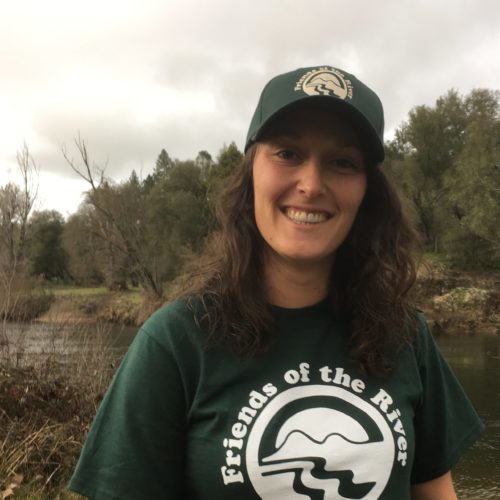
By Alicia Thompson, Cohort 2018.

Last December, the California State Water Board held public hearings in towns to gather local perspectives on amendments to the Bay Delta Plan. I attended with curiosity—albeit reluctantly—because a friend asked me. She had participated in the River Advocacy Training School (RATS) lead by Friends of the River to gain experience in river advocacy and policy. I didn’t know what to expect, but I wanted to be physical present at the hearing in support of wild flowing rivers, unadulterated lakes, and healthy California ecosystems that fuel my adventures and rejuvenate my soul. Even though I was nervous to speak in front of the State Water Board when I arrived, I walked away feeling extremely proud for standing up for California’s threatened rivers and the flora and fauna that reside in those habitats.

Even though I was nervous to speak in front of the State Water Board when I arrived, I walked away feeling extremely proud for standing up for California’s threatened rivers and the flora and fauna that reside in those habitats.

A few months later I discovered that Friends of the River was accepting applications for their next RATS cohort. At first I felt woefully uneducated in California’s water complexities to be an outspoken advocate for rivers, and I was reluctant to commit. However, I recalled my Water Board experience and the reward that came from being a voice for our threatened ecosystems. This wasn’t about me; it was about conserving wild landscapes for future generations. So I applied.

I was accepted into the River Advocacy Training School’s Spring 2018 cohort, and have enjoyed every moment of it. The training itself was phenomenal. I learned about the current issues and water bills flowing through our State Legislature, the history of water use in California, the rules and regulations of water right allocation, and the pitfalls of dam building. Separate than water education, we had lectures and presentations on recruiting for grassroots movements, registering voters, and amplifying our voices on behalf of rivers.

Separate than the training, the program has also provided me with numerous growth and challenge opportunities. Due to the extended nature of the program, I have been able to use trial and error methods to implement various recruitment strategies and outreach techniques. I have been able to coordinate and facilitate events, participate in neighborhood canvassing days, and network with water enthusiasts- all alongside a supportive cohort of river loving peers.

Overall, Toby and the RATS Program as a whole provides enough shape to be structured and enough flexibility that it fosters creativity and individuality.

Another highlight of the program for me has been the encouragement and mentorship that I have received from Toby, the Program Coordinator. The program is designed to provide space for weekly check-in’s with her, which have proven invaluable. She listens to my goals and struggles, and is constantly trying to make this a positive and growth-oriented experience for everyone involved. She encourages me to step out of my comfort zone and challenge myself, while also providing organizational, logistical, and emotional support. Overall, Toby and the RATS Program as a whole provides enough shape to be structured and enough flexibility that it fosters creativity and individuality. I have felt adequately challenged and comfortably supported during the entire process.

It can be daunting to embark on a multi-month journey, as well as feel powerful and knowledgeable enough to make a difference in the turbulent California water world. However, now, more than ever, our wild landscapes need representatives. The RATS program will give you the tools and inspiration to activate yourself and others in conserving our threatened riparian habitats and recreational spaces. I want to encourage all of you to think about applying to the upcoming RATS Fall 2018 cohort, or another cohort in the future. California’s gorgeous rivers could definitely use your help!

Learn more about how to apply.

The San Joaquin River Gorge – A Potential Wild & Scenic River Threatened By A Dam

by Steve Evans, Wild Rivers Consultant

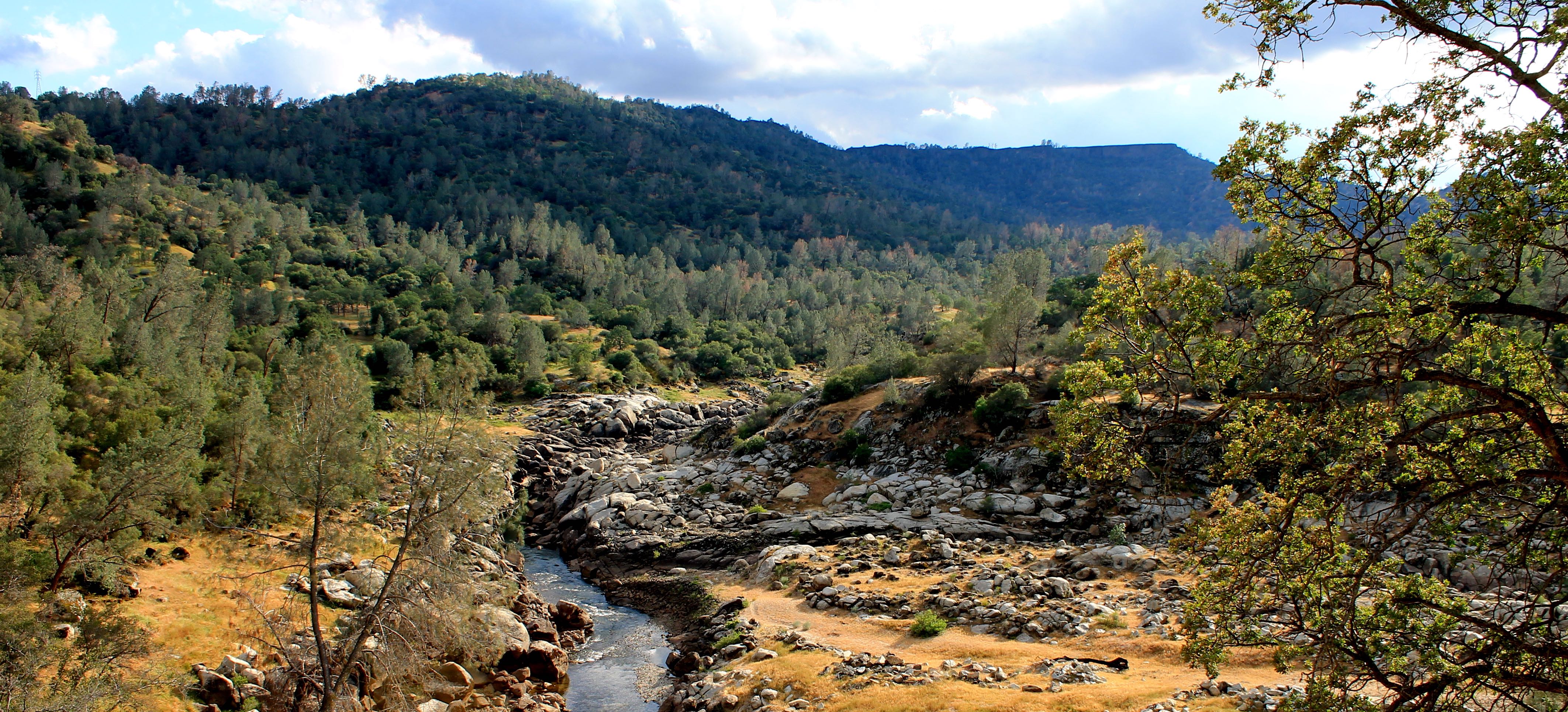
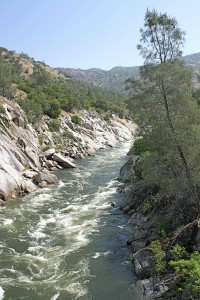
The San Joaquin River flows through a spectacular gorge in the Sierra Nevada foothills northeast of Fresno. More than 6,000 acres of the Gorge is public land managed by the Bureau of Land Management (BLM).  An extensive trail system provides access to the Gorge for hikers, mountain bikers, equestrians, hunters, wildlife and wildflower aficionados, and class IV-V whitewater kayakers. One of the few publicly owned recreation areas in the lower foothills of Fresno and Madera Counties, the Gorge also features three campgrounds, an outdoor environmental education classroom, and a small natural history museum. The Gorge is a popular outdoor recreation destination for more than 85,000 visitors annually.

BLM’s San Joaquin River Gorge Management Area is located just upstream of the existing Millerton Reservoir and Friant Dam. A short 45-minute drive from Fresno via Highway 168 and through the small town of Auberry brings visitors to this delightful area. Granite rock outcrops punctuate the oak woodlands, meadows, and chaparral of the Gorge, which is probably best known for its gorgeous spring wildflower display. This habitat supports a wide range of wildlife, including mule deer, bear, mountain lion, waterfowl, and more than 24 sensitive, threatened, or endangered species.

IMG_1586.JPG

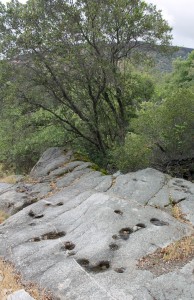
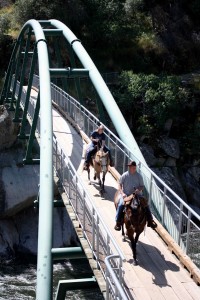
Miles of trails provide access to the Gorge and its surrounding uplands, including the Wu Ki’ Oh National Recreation Trail and a segment of the San Joaquin River Trail proposed for National Recreation Trail designation. Trailhead corrals make the trail system popular with equestrians. Three campgrounds (including walk-in, group, and equestrian campgrounds) provide ideal base camps to explore the area. The Gorge is also rich in Native American culture. Acorn grinding holes are common in bedrock outcrops, a reminder of the Dumna and Kechayi Native Americans who once called the Gorge their home.

The outstanding natural and cultural values make the San Joaquin River Gorge a unique outdoor classroom. The BLM and its local partners operate a small natural and cultural history museum in the Gorge, which offers a wide variety of hands-on interactive educational programs for K-12 students, including guided nature walks, geology, history, and Native American basketry, games, and stories. To learn more about the BLM’s San Joaquin River Gorge area, visit: http://www.blm.gov/ca/st/en/fo/bakersfield/Programs/Recreation_opportunities/SJRG_SRMA.html.

IMG_1630.JPG

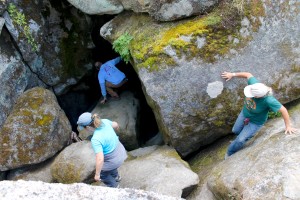
One of the relatively unknown natural values of the San Joaquin River Gorge is the Millerton Cave system. Considered by spelunkers to be a unique cave system, the Millerton Cave is the world’s most notable example of a cave carved in granite bedrock. Almost a mile long, the cave system has been sculpted over thousands of years by a year-round flowing underground stream. Besides its scientific values, the cave offers unique recreational opportunities to trained spelunkers.

Because of the Gorge’s unique and nationally significant values, the BLM in 2012 recommended eight miles of the Gorge for protection as a National Wild & Scenic River.  Wild & Scenic protection of the San Joaquin River Gorge would preserve the free flowing character of only remaining undammed segment of the San Joaquin River in the Sierra Nevada foothills. It would also protect the Gorge’s specific outstandingly remarkable scenic, cultural, and wildlife values. First and foremost, Wild & Scenic River designation of the Gorge would protect it from the proposed Temperance Flat Dam, which threatens to drown the river’s unique natural and cultural values under a reservoir.

SJRG Bridge Horses

The BLM’s fellow-federal agency, the Bureau of Reclamation, is currently studying the proposed Temperance Flat Dam, which would be located in the San Joaquin River Gorge, just upstream of the existing Millerton Reservoir and Friant Dam. If constructed, the Temperance Flat Dam would destroy or degrade virtually all the recreation, scenic, and cultural values of the public lands along the river and within the Gorge.

Ironically, the proposed dam’s potential contribution to the state’s water supply is miniscule. The truth is the Temperance Flat Dam (Read the TFD Fact Sheet 3-2-2016) is an expensive and ineffective solution to the state’s water needs. Studies prove that dams are the most expensive and least reliable water options in the state, and that’s not calculating the loss of such beautiful natural areas like the San Joaquin River Gorge.

SJRG Scenic 1

How To Get There: From Fresno, drive 31 miles northeast on Highway 168, past the town of Prather, to the Auberry Road intersection. Turn left on Auberry Road and drive 5 miles to the town of Auberry. Drive through Auberry and veer left on Powerhouse Road (also known as New Auberry Road). Drive 1.8 miles to the Smalley Road intersection, turn left. Proceed down narrow but paved Smalley Road to BLM’s San Joaquin Gorge Area. The trailhead to the river is located in the campground.  It is a relatively easy one-mile walk through oak woodlands down to the trail bridge, which provides breath-taking views of the San Joaquin River Gorge.

For up to date information about the Gorge and the status of its roads and trails, contact the BLM’s San Joaquin River Gorge Manager, Tracy Rowland, at (559) 855-3492, email: trowland@ca.blm.gov.

Friends of the River is organizing a weekend camping trip this spring (April 30 – May 1) in the Gorge for our members, donors, and anyone interested in helping preserve this magnificent river. Please contact us for the date and more information at info@friendsoftheriver.org.

50 Ways to Save Your River!

50 Ways to Save Your River!

Did you know that only 3% of the Earth’s water is fresh-water? And of that 3%, 2/3rds is frozen in glaciers and polar ice caps. That means only 1% of the Earth’s freshwater supply is accessible for use! This is why it is so important to conserve the limited amount of water that we do have.

The average American uses 80-100 gallons of water every day, in California we use between 85 and 251 depending on were you live! Nationwide we use twice the global average and in some parts of California we use four times as much. If everybody does a little bit here and there, we will be able to cut down on consumption and preserve this valuable resource and save our rivers. Here is a list of 50+ ways…TO SAVE YOUR RIVER!

General Ideas

1.  Instead of using the air conditioning when it gets hot, turn on the fan. It will only take about an hour to cool down your house, saving you money and water.

2. Buy recycled paper products as opposed to “virgin” paper products. Recycled paper requires far less water than brand new paper production.

3.  Insulating your pipes will not only save you money in energy costs, you won’t waste water when you’re waiting for it to heat up.

4.  If you accidentally drop an ice cube, don’t throw it down the sink, use it to water a house plant.

5.  Collect the water that you run while waiting for the water to reach your desired temperature and use it to water plants. This same idea applies for shower and bath water too!

6.  And if you have left over ice from a to-go cup, instead of dumping it down the sink, also use it to water a plant.

7.  Buy a reusable water bottle and use it. The production of 1 imported bottle of water uses 6.74 kilograms of water. This is the equivalent of 15 pounds of water, which is close to 2 gallons! Imagine if you drink a bottle every day (way below the recommended amount) that would be 365 days x 2 gallons per bottle= 730 gallons of water a year wasted just in production. http://www.treehugger.com/files/2007/02/pablo_calculate.php

8.  Fix your leaky faucets. One small drip leaks about 20 gallons a day. http://www.eartheasy.com/live_water_saving.htm

9.  Only run your dishwasher and laundry machine when you have full loads, this will save up to 1,000 gallons a month. http://wateruseitwisely.com/100-ways-to-conserve/index.php

10.  If you have a pool, keep a cover on it when not in use. This will prevent evaporation and keep your pool cleaner. Covering your pool can save up to 250 gallons a week plus the cost that chemicals would have been to clean it more frequently. http://www.sandiego.gov/water/conservation/tips.shtml

11.  An easy one is to clear off your driveway and sidewalks by using a broom, instead of the hose.

12.  Use cat litter or sand instead of salt on icy walkways. Not only does salt pollute water, but it also kills plants. www.epa.gov

In the Kitchen and the Food You Eat

13.  Don’t defrost your frozen food by running water, try to plan ahead and put it in the fridge over night or defrost in the microwave, this will save 150-250 gallons. http://www.monolake.org/about/waterconservation

14.  Your diet also has a lot to do with water use:
– One pound of beef, enough to feed a family of four requires 1,799 gallons of water.
– One hamburger needs 660 gallons to produce it.
– One pound of chicken involves 468 gallons of water in production.
– One gallon of coffee calls for 880 gallons of water. If every person in the world drank        one cup of coffee every morning that would be 32 trillion gallons of water lost a year!
– One pound of chocolate uses 3,170 gallons in production. One Hershey bar is .1 pounds, so the production of only 10 Hershey’s bars uses 3,170 gallons.
Moral of the story: Watch what you eat because even the most surprising items require lots of water. To find out about the impact of other foods and various other necessities on water visit the National Geographic, Environment, Fresh Water section of their website. http://environment.nationalgeographic.com/environment/freshwater/embedded-water/

15.  Instead of letting the water run while you try to scrape off the dried-on food from your pots and pans, just soak them. This will not only save water, but time and energy too. http://wateruseitwisely.com/100-ways-to-conserve/index.php

16.  If you wash your dishes by hand don’t let the water continuously run. Turn it on and off when you need to rinse the dish off. www.epa.gov

17.  A good idea, if you wash your dishes by hand, is to use an in-sink dish rack and rinse all the dishes off at once. www.epa.gov

18.  Keep a pitcher of cold water in the fridge. That way when you want to make your favorite cold beverage the water is already at hand, you won’t have to wait for it to cool down and waste water in the process. http://wateruseitwisely.com/100-ways-to-conserve/index.php

The Bathroom

19. Take a shower instead of a bath. Baths use up to 70 gallons of water while showers can use as little as 10-25. If you do take a bath, make sure to plug the drain first and then adjust the temperature from there. You can always fill it up with hotter water to compensate for the cold at first.

20. Replace your current showerhead with a low-flow model. The low-flows use 2.3 gallons of water per minute versus the old shower heads which use 6. This saves about 35 gallons of water in a 10 minute shower, and if you take one every day or every other day that’s a savings of 6,388-12,775 gallons a year. The cost of a low-flow showerhead ranges from $40-$90. A range of 6,388 gallons to12,775 gallons a year is a lot for your water bill to take, $40-$90 is well worth the relatively inexpensive cost. http://www.lowes.com/cd_Install+Low+Flow+Shower+Heads+and+Aerators_134043203_

21. The same thing goes for using a low flow toilet. Instead of using 6 gallons of water per flush, the low flow toilets will use 1.6 gallons. http://simplesapien.com/40-ways-to-conserve-water/

22. Don’t flush random trash down the toilet, just toss it in the trash can. http://simplesapien.com/40-ways-to-conserve-water/

23. Shortening your shower by just 1 to 2 minutes could end up saving you close to 150 gallons a month. http://wateruseitwisely.com/100-ways-to-conserve/index.php

24. Turning off the water while you shave and only filling your sink with a few inches of water to rinse with will save up to 300 gallons a month. http://wateruseitwisely.com/100-ways-to-conserve/index.php

25. Make sure to turn off the tap while you are brushing your teeth in the morning and at night. This will save up to 8 gallons of water, which is more than 200 a month! http://www.epa.gov/WaterSense/kids/tap-off.html

26. Install a water displacement device in the back of your toilet so less water is used. Put a plastic bottle or jug back there. When placing it make sure that it does not prevent any of the parts from working.

Lawn and Garden

27. Water your lawn during the early morning or late at night when the temperature is cooler to avoid losing water to evaporation. http://www.eartheasy.com/live_water_saving.html

28. Your lawn only needs watering every 5-7 days in the summer and 10-14 in the winter. Plus a heavy rain eliminates the need to water for 2 weeks. Every day and every other day is just excessive and is drowning your lawn. They also sell devices that shut off your sprinkler system after rain; buying one of those will help you save money on your water bill, and conserve water! http://www.americanwater.com/49ways.php

29. Consider using the nutrient rich fish tank water to water your lawn when you change it, as opposed to just pouring it down the drain. http://wateruseitwisely.com/100-ways-to-conserve/index.php

30. Plant native vegetation in your yard, they are better adapted to the climate you live in, therefore requiring less maintenance on your part and less water. http://www.groundwater.org/kc/easywaystoconserve.html

31. Spread organic mulch around your plants, this will help them hold in water. http://wateruseitwisely.com/100-ways-to-conserve/index.php

32. Aerate your lawn at least once a year to help it absorb water better, as opposed to losing it because of run-off. http://wateruseitwisely.com/100-ways-to-conserve/index.php

33. Raise your lawnmower blade to 3”. This allows the grass’ roots to grow deeper, while also shading the root system and helping the soil hold in moisture better. http://www.americanwater.com/49ways.php

34. Find out about the grey-water regulations in your city. By using grey-water (which is the water from your showers, baths, sinks, laundry…) to water your lawn, you will drastically cut down on water consumption and the cost of water. If you end up doing this make sure you use soaps and detergents that are intended for this type of use.

35. Make sure that you pull those weeds, they’re competing with your lawn/ garden for water. http://simplesapien.com/40-ways-to-conserve-water/

36. The next time your sprinklers are running go outside and take a look at where they are hitting. If they are hitting the street, sidewalk, or any area that is not your lawn adjust them. There’s no need to water the cement. http://simplesapien.com/40-ways-to-conserve-water/

37. Plant your garden in the fall when it is cooler outside and there is more rainfall.

38. Group plants that have the same water needs together. This way you can avoid over-watering some, and under-watering others. http://wateruseitwisely.com/100-ways-to-conserve/index.php

39. Only water when you need to, more plants die from over-watering than from a lack of water. http://wateruseitwisely.com/100-ways-to-conserve/index.php

40. Water in several short sessions as opposed to one long one. This will better allow your lawn to absorb the water and prevent runoff.

Working with Your Car

41. Clean your car using a pail of soapy water. Only using the hose to rinse will save 150 gallons. http://www.eartheasy.com/live_water_saving.htm

42. Better yet, have your car washed at a car wash where they recycle the water, not only are you saving that water but you are saving the nearby river from dirty runoff. If this is not an option, water your car on the grass, you will get the benefits of: watering your lawn, saving water and saving money, all at once. http://www.americanwater.com/49ways.php

Furry Friends

43. Wash your pets on the lawn, excess water will be absorbed by the plants. http://simplesapien.com/40-ways-to-conserve-water/

44. When you give your pet fresh water don’t just dump the old water down the drain, use it to water a tree, shrub, or house plant. http://manojpkvga.blogspot.com/2011/05/100-ways-to-conserve-water.html

In the Wild

45. If you live in California, visit the web site: http://www.keepcabeautiful.org to find a creek or river clean up you can participate in!

46. Next time you go camping, hiking or any other outdoor activity, make sure you pack out what you pack in. Don’t leave any waste behind.

47. When you camp out, avoid washing any dishes or going to the bathroom near the river.

Be the Voice for Your River

48. Teach your kids to be water conscious. Instilling conservation habits from a young age will help them become sustainable adults.

49. Just because you aren’t covering the water bill, like at a hotel or friends house, still conserve water. It’s not just about the money; we need to use water wisely.

50. Support Friends of the River!


Friends of the River on the Move: 2015 Feats and Plans for 2016

2015 Highlights

Friends of the River is building and energizing grassroots support for the magnificent rivers of California. In 2015 FOR:

  • Brought together 27 river groups in Sacramento for the first California Rivers Day to give our rivers a stronger voice in the State Capitol.
  • Passed legislation to grant interim Wild & Scenic protection for the Mokelumne River.
  • Took more than 100 leaders, reporters, and experts on 8 river rafting trips, including the historic whitewater run on Stanislaus River which resurfaced as New Melones Reservoir dropped to an historic low. Watch the video of Mark Dubois leading the expedition!
  • Helped pass legislation to put limits on suction dredge mining in rivers.
  • Partnered with the New Voices Are Rising program to take high school students from underserved communities in Oakland to the Mokelumne River to see where their water comes from, spend a day in the Capitol to meet with legislators and the Governor’s office, and go camping and whitewater rafting on the American River. Watch the new video about this summer program!

Thanks to all of the FOR members who made this work possible!

Plans for 2016

The drought has been driving a push to build new mega reservoirs in California. Now, with the El Niño, we are hearing calls for new dams to capture runoff and control floods. We all welcome rain and snow, but we already have a vast network of 1,400 dams in California ready to catch water. Building more would be extremely expensive and destructive. Here’s the bottom line: the big dam projects under consideration would cost more than $9 billion to add just 1% to California’s water supply. FOR is working to protect our rivers from these new dams and diversions, but we need to change the debate to focus on smart water solutions so we can have healthy and vibrant waterways while meeting our water needs. Here is what we have planned for the coming year…

River RATS!

To build on our work over the last year, FOR is launching the River Advocacy Training School (River RATS) program to train and deploy the next generation of river advocates. Our goal is to recruit at least ten of the best and brightest from college campuses, other river groups, and key communities to attend an intensive 4-day training at Camp Lotus to learn about water policy, grassroots organizing, river ecology, and natural history from experts in the field. After training, these organizers will go back to their campuses and communities to engage thousands of people in the river protection movement. Then, they’ll bring them to Sacramento for the California Rivers Day and Paddle to the Capitol in 2016! Finally, the River RATS will have the opportunity to return to the American River to attend FOR’s Guide School to become a whitewater rafting guide or canoeist to help build our rafting program. Learn more about River RATS.

Expanded Outreach and Education

  • The River RATS Program will expand FOR’s capacity so that we can do more to protect rivers. Accordingly, in 2016 we will be able to organize:
  • 10 river trips for leaders, reporters, and water policy experts.
  • The CA Rivers Day so we can meet with at least half of the legislature.
  • Paddle to the Capitol—a five-day journey down the American River to the State Capitol this summer.
  • The Salmon Run—a 5K fun run in Sacramento to raise awareness and support for rivers and the fish and wildlife they sustain.
  • Dozens of community events and activities from river cleanups and tabling to movie nights and social get-togethers.
  • Media events and outreach that will generate dozens of news stories to educate and engage the broader public in our work. See recent press clips here.

Policy Advocacy and Government Relations

Our stronger grassroots base of support will help FOR leverage our advocacy to protect and restore threatened waterways like the McCloud, Yuba, Merced and the San Francisco Bay-Delta. Currently, the state is preparing to spend $2.7 billion for new storage, members of Congress are pushing to pass short-sighted legislation to expedite dam building and weaken environmental protections by the end of the year, and the Governor is bent on building two massive tunnels through the San Francisco Bay-Delta to move more water from north to south. FOR will meet with legislators and key government agencies, track and comment on legislation, participate in regulatory and planning proceedings and coordinate a coalition of other environmental organizations, fishing groups and Native American Tribes working on these issues. One way you can help is by signing up for the River Advocate to stay informed and engaged.

Thank you!

Thank you for supporting FOR—the only statewide organization focused on protecting California’s rivers. With your help, we’ll train a new generation of river advocates, build our grassroots base of support, and secure sustainable water policies that protect our rivers.

Please take a moment to make a contribution today!