Bookmark and Share
FOR Logo Friends of the River
 The voice of California's rivers

Peripheral Canal Redux: Is It Déjà Vu All Over Again?

A committee, formed by Governor Arnold Schwarzenegger, has recommended that the state build the Peripheral Canal around or through the Sacramento-San Joaquin Delta. The recommendation isDelta smelt presented, the same as proposed two years ago, without the advice of scientists or the assistance of environmental studies. The recommendation (or report) is simply the latest battle in California’s chronic water wars. Meanwhile, Delta smelt and other fish species continue to decline.

The Implementation Plan proposes to build the Peripheral Canal which is euphemistically called “a new system of dual water conveyance” to continue and perhaps expand fresh water exports from the Delta. The dual conveyance would use a new canal and “improved” Delta channels to export water. The plan also calls for additional storage (in other words new expensive dams) to benefit water supplies. Other notable recommendations are: substantial and long term investment in Delta ecosystem restoration, improved incentives for water conservation and alternative water supplies through recycling and reclamation, and an investment plan to “protect and enhance” the unique Delta region. Nonetheless, conservationists fear that these positive actions will not be succesful if the state continues or expands Delta exports. The recommendation to build the canal can be read in

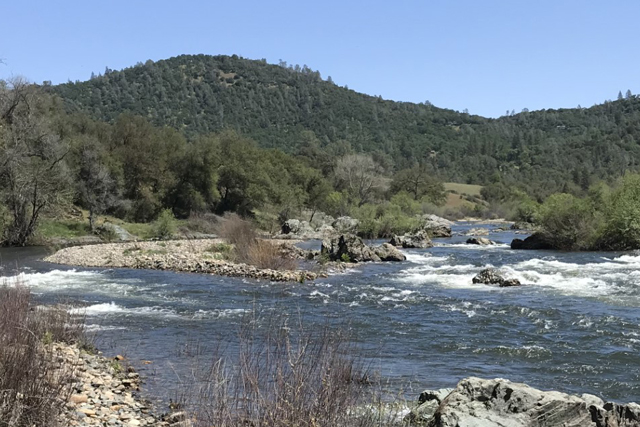
Piru Creek
Piru Creek
the Delta Vision Committee Implementation Plan report.

A similar proposal to build the canal to boost exports of fresh water to the San Joaquin Valley, Tulare Basin, and southern California was rejected by state voters in 1982. According to the Governor’s Delta Vision Committee, the purpose of the canal this time around will be to restore the Delta’s declining ecosystem and its endangered fish species. The side benefit is that the canal will allow continued if not increased fresh water exports from the already beleaguered estuary.

Problems with the Plan:

  • A key issue regarding the Plan is its failure to determine how much water the Delta ecosystem needs and to commit to meet those needs first before moving forward with a new canal that could further drain the estuary of much needed fresh water. The plan requires that the California Department of Fish and Game establish instream flows for the Delta by 2012, after the state moves forward with canal construction in 2011.
  • Another issue is that the Delta Vision Committee’s did not endorse the creation of a new governance structure to achieve the Delta restoration goals as reccomended by the Governor's Blue Ribbon Task Force. Instead, the Governor is simply promising to “improve” the existing governance structure, which has previously led to the rampant and deliberate violation of state and federal environmental laws. (In response to lawsuits filed by FOR and others, a federal judge has ruled that Delta water exports harm endangered fish species.)
  • The canal is directly tied to the construction of new or expanded surface storage dams (inefficient and expensive) and reservoirs in California.

This fits into the Governor's Plans...

The Governor’s new canal comes with new proposals to raise Shasta Dam on the Sacramento River, build the Sites Reservoir in the Sacramento Valley, expand the Los Vaqueros Reservoir in Contra Costa County, and build the Temperance Flat Dam on the San Joaquin River. Friends of the River has criticized these projects as too expensive and relatively ineffective in producing new water supplies. Reasonable investments in water conservation, recycling and reclamation, and environmentally beneficial groundwater management will produce far more water at a fraction of the cost of new and expanded dams.

Next Steps

The canal proposal promises a replay of the bitterly fought water battle between agribusiness, urban areas, and environmentalists. It may even pit some environmental groups against each other. Although there is the significant matter of funding and the multi-billion dollar state deficit. Undoubtedly, his canal and new dam proposals will be the centerpiece of yet another water bond which could be introduced in the legislature any day now.Whether legislators or California voters will appreciate the Governor’s don’t-bother-me-with-the-details approach to water policy remains to be seen.

Some Water Facts

The Peripheral Canal and new or expanded dams are not needed to meet California’s water needs. Water conservation, recycling and reclamation, and environmentally beneficial groundwater management can easily meet our needs at a fraction of the cost. The Delta ecosystem has been damaged by the construction and operation of upstream dams and by the pumping of fresh water from the Delta for export south. It is a fundamental reality that we cannot restore the Delta by building more dams upstream, as well as a canal that will facilitate continued or expanded exports. Most of the state is not as dependent on Delta water exports as claimed by the Governor and other elected officials. Statewide, Delta exports via the state and federal water projects make up less than 12% of the state's developed water supply. Even southern California cities receive only about 20% of their water from the Delta. Local surface storage projects, groundwater, and reuse/recycling provide most of the consumptive water supplies in California. No one is demanding that all Delta exports end. However, many independent scientists agree that Delta exports must be reduced in order for the Delta ecosystem and its endangered species to recover. Delta fish populations, including Delta smelt, longfin smelt, and stripped bass, have dropped to all time lows. Central Valley salmon populations, which must migrate through the Delta, have also declined to all time lows. Delta water fails to meet state and federal water quality standards. Delta exports significantly contribute to all these problems.


Join or Donate

Take Action to Protect Our Rivers

Become a Sustainer

Sign up for FOR's
electronic newsletter:
   Please leave this field empty

50 Ways to Save Your River

EarthShare California

Questions or comments: