|
New regulations proposed for suction dredge gold mining in California will threaten fish, frogs, water quality and people. This form of mining uses a powerful motor and pump, attached to a hose that is used to suction up gravel from the stream bottom. Gold is then sorted out from the gravel and the remaining sediment filled water is flushed back into the stream. The adverse impacts of this type of mining are well documented by scientists. Suction dredging can harm habitat for sensitive, threatened, and endangered fish and frogs, as well as release toxic mercury left over from the Gold Rush into the stream.
The new regulations proposed by California Department of Fish and Game (CDFG) are a hodge-podge of mostly weak and non-existent restrictions and fail to protect endangered steelhead, salmon, frogs and other species. The new regulations fail to ensure that mining does not harm water quality and human health with sediment and mercury. Special areas like Wild & Scenic Rivers and Wild Trout Streams are not protected in the regulations either. The regulations even permit suction dredge mining in Yosemite Valley and other National Parks! In addition, the regulations will depend on active enforcement from CDFG, which like other state agencies, is suffering from severe budget cuts.
Friends of the River is working to amend the regulations to:
- Prohibit suction dredge mining in all rivers and streams that provide critical habitat and future recovery areas for threatened and endangered fish and wildlife.
- Close all mercury-impaired rivers and streams to suction dredge mining to protect water quality, human health, fish and wildlife.
- Ensure that the extraordinary and outstanding values of state and federal Wild & Scenic Rivers are protected.
- Make sure that the fishery values of state Wild Trout Streams are fully protected in the new regulations.
- Close rivers and streams to mining if budget cuts result in insufficient wardens in the field to enforce the new regulations.
Now you have the opportunity to speak out for the protection of rivers, fish and wildlife, water quality, and public health! Attend the public hearing nearest you. Speak out! Support closing rivers and streams to suction dredge mining that:
- Provide critical habitat and recovery areas for threatened and endangered fish and wildlife.
- Are mercury-impaired, to protect water quality, public health, fish, and wildlife.
- Are federal or state designated Wild & Scenic Rivers and/or Wild Trout Streams, or are located in National Parks.
- Could be harmed if there are insufficient wardens in the field to enforce the new regulations.
Here are the public hearings:
- Santa Clarita: TODAY - Wednesday, March 23, at 5 p.m., at the Residence Inn by Marriott, 25320 The Old Road.
- Fresno: Thursday, March 24, at 5 p.m., at the CA Retired Teachers Association, 3930 E. Saginaw Way.
- Sacramento: Tuesday, March 29, at 5 p.m., at CalEPA Headquarters Building, Byron Sher Room, 1001 I Street.
- Yreka: Wednesday, March 30, at 5 p.m., at the Yreka Community Center, 810 N. Oregon Street.
- Redding: Thursday, March 31, at 5 p.m., at the Shasta Senior Nutrition Program, 100 Mercy Oaks Drive.
Please write a letter TODAY and plan to attend a public hearing near you.
Written comments are due by April 29, 2011. See FOR's website for a sample letter by clicking here.
Examples of the worst aspects of the proposed regulations include:
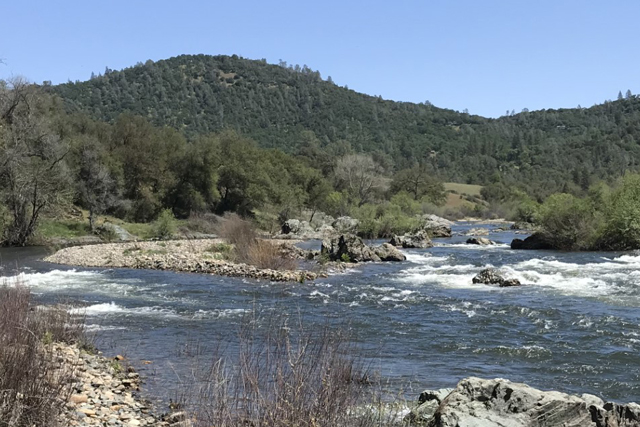
North Fork American River (Placer County) – This truly wild river was formerly off limits to suction dredging. The new regulations allow year round suction dredging upstream of Big Valley Canyon, which would be harmful to sensitive foothill yellow-legged frog and wild trout. Adding insult to injury, the proposed regulations also allow the use of larger suction nozzles on the North Fork. This stream is both a federally designated Wild River and a state-designated Wild Trout Stream, neither of which seems to have been considered by CDFG in the development of the new regulations. Mining will harm the river’s exceptional water quality and clarity, as well as its extraordinary scenic, recreation, fishery values.
South Yuba River (Nevada County) – One of the most popular swimming rivers in the Sierra Nevada, the South Yuba under the new regulations will be open to suction dredge mining from Jul. 1 to Jan. 31. Unfortunately, the river gravels are impregnated with mercury, which was used to process gold during the Gold Rush. Dredging will release this toxic material into the water, potentially threatening the health of people and wildlife alike. In addition, mining will be allowed in a segment of the South Yuba that provides critical habitat for the threatened California red-legged frog. Mining will also conflict with the extraordinary scenic and recreational values of this state-designated Wild & Scenic River.
Klamath River (Siskiyou County) – The Klamath formerly supported the third largest salmon population on the west coast. This fishery has dwindled to virtually nothing. The Klamath was also one of the most heavily dredged rivers in the state prior to the moratorium. Unfortunately, the new regulations allow suction dredging on the river downstream of Iron Gate Dam from Jul. 1 to Sep. 30. A state and federally designated Wild & Scenic River, continued mining on the Klamath will harm its extraordinary salmon fishery. Dillon Creek, a key Klamath tributary that supports the best remaining population of summer steelhead in the state, was formerly closed but is now open to suction dredging as well.
San Gabriel River (Los Angeles County) – Portions of the upper San Gabriel River in the San Gabriel Mountains are closed to dredging in the new regulations. But a segment of the East Fork, which is critical habitat for the endangered Santa Ana sucker, is open to dredging from Sep. 1 to Jan. 31. Before the moratorium, the East Fork suffered from some of the most unregulated mining on public lands in this state. Dredgers were lined up next to each other, turning over the entire streambed in their search for gold, often diverting the stream into other channels, and discouraging other visitors from even enjoying the river. The new regulations reinstate the East Fork as a mining sacrifice area, regardless of the adverse impacts on endangered fish or other recreation visitors.
TAKE ACTION TODAY - CLICK HERE
For more information, contact Steve Evans at Friends of the River, phone (916) 442-3155 x221, email: sevans@friendsoftheriver.org
|