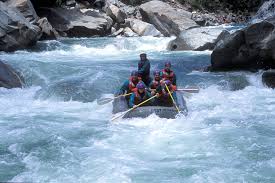
50 Ways to Save Your River!
Did you know that only 3% of the Earth’s water is fresh-water? And of that 3%, 2/3rds is frozen in glaciers and polar ice caps. That means only 1% of the Earth’s freshwater supply is accessible for use! This is why it is so important to conserve the limited amount of water that we do have.
The average American uses 80-100 gallons of water every day, in California we use between 85 and 251 depending on were you live! Nationwide we use twice the global average and in some parts of California we use four times as much. If everybody does a little bit here and there, we will be able to cut down on consumption and preserve this valuable resource and save our rivers. Here is a list of 50+ ways…TO SAVE YOUR RIVER!
General Ideas
1. Instead of using the air conditioning when it gets hot, turn on the fan. It will only take about an hour to cool down your house, saving you money and water.
2. Buy recycled paper products as opposed to “virgin” paper products. Recycled paper requires far less water than brand new paper production.
3. Insulating your pipes will not only save you money in energy costs, you won’t waste water when you’re waiting for it to heat up.
4. If you accidentally drop an ice cube, don’t throw it down the sink, use it to water a house plant.
5. Collect the water that you run while waiting for the water to reach your desired temperature and use it to water plants. This same idea applies for shower and bath water too!
6. And if you have left over ice from a to-go cup, instead of dumping it down the sink, also use it to water a plant.
7. Buy a reusable water bottle and use it. The production of 1 imported bottle of water uses 6.74 kilograms of water. This is the equivalent of 15 pounds of water, which is close to 2 gallons! Imagine if you drink a bottle every day (way below the recommended amount) that would be 365 days x 2 gallons per bottle= 730 gallons of water a year wasted just in production. http://www.treehugger.com/files/2007/02/pablo_calculate.php
8. Fix your leaky faucets. One small drip leaks about 20 gallons a day. http://www.eartheasy.com/live_water_saving.htm
9. Only run your dishwasher and laundry machine when you have full loads, this will save up to 1,000 gallons a month. http://wateruseitwisely.com/100-ways-to-conserve/index.php
10. If you have a pool, keep a cover on it when not in use. This will prevent evaporation and keep your pool cleaner. Covering your pool can save up to 250 gallons a week plus the cost that chemicals would have been to clean it more frequently. http://www.sandiego.gov/water/conservation/tips.shtml
11. An easy one is to clear off your driveway and sidewalks by using a broom, instead of the hose.
12. Use cat litter or sand instead of salt on icy walkways. Not only does salt pollute water, but it also kills plants. www.epa.gov
In the Kitchen and the Food You Eat
13. Don’t defrost your frozen food by running water, try to plan ahead and put it in the fridge over night or defrost in the microwave, this will save 150-250 gallons. http://www.monolake.org/about/waterconservation
14. Your diet also has a lot to do with water use:
– One pound of beef, enough to feed a family of four requires 1,799 gallons of water.
– One hamburger needs 660 gallons to produce it.
– One pound of chicken involves 468 gallons of water in production.
– One gallon of coffee calls for 880 gallons of water. If every person in the world drank one cup of coffee every morning that would be 32 trillion gallons of water lost a year!
– One pound of chocolate uses 3,170 gallons in production. One Hershey bar is .1 pounds, so the production of only 10 Hershey’s bars uses 3,170 gallons.
Moral of the story: Watch what you eat because even the most surprising items require lots of water. To find out about the impact of other foods and various other necessities on water visit the National Geographic, Environment, Fresh Water section of their website. http://environment.nationalgeographic.com/environment/freshwater/embedded-water/
15. Instead of letting the water run while you try to scrape off the dried-on food from your pots and pans, just soak them. This will not only save water, but time and energy too. http://wateruseitwisely.com/100-ways-to-conserve/index.php
16. If you wash your dishes by hand don’t let the water continuously run. Turn it on and off when you need to rinse the dish off. www.epa.gov
17. A good idea, if you wash your dishes by hand, is to use an in-sink dish rack and rinse all the dishes off at once. www.epa.gov
18. Keep a pitcher of cold water in the fridge. That way when you want to make your favorite cold beverage the water is already at hand, you won’t have to wait for it to cool down and waste water in the process. http://wateruseitwisely.com/100-ways-to-conserve/index.php
The Bathroom
19. Take a shower instead of a bath. Baths use up to 70 gallons of water while showers can use as little as 10-25. If you do take a bath, make sure to plug the drain first and then adjust the temperature from there. You can always fill it up with hotter water to compensate for the cold at first.
20. Replace your current showerhead with a low-flow model. The low-flows use 2.3 gallons of water per minute versus the old shower heads which use 6. This saves about 35 gallons of water in a 10 minute shower, and if you take one every day or every other day that’s a savings of 6,388-12,775 gallons a year. The cost of a low-flow showerhead ranges from $40-$90. A range of 6,388 gallons to12,775 gallons a year is a lot for your water bill to take, $40-$90 is well worth the relatively inexpensive cost. http://www.lowes.com/cd_Install+Low+Flow+Shower+Heads+and+Aerators_134043203_
21. The same thing goes for using a low flow toilet. Instead of using 6 gallons of water per flush, the low flow toilets will use 1.6 gallons. http://simplesapien.com/40-ways-to-conserve-water/
22. Don’t flush random trash down the toilet, just toss it in the trash can. http://simplesapien.com/40-ways-to-conserve-water/
23. Shortening your shower by just 1 to 2 minutes could end up saving you close to 150 gallons a month. http://wateruseitwisely.com/100-ways-to-conserve/index.php
24. Turning off the water while you shave and only filling your sink with a few inches of water to rinse with will save up to 300 gallons a month. http://wateruseitwisely.com/100-ways-to-conserve/index.php
25. Make sure to turn off the tap while you are brushing your teeth in the morning and at night. This will save up to 8 gallons of water, which is more than 200 a month! http://www.epa.gov/WaterSense/kids/tap-off.html
26. Install a water displacement device in the back of your toilet so less water is used. Put a plastic bottle or jug back there. When placing it make sure that it does not prevent any of the parts from working.
Lawn and Garden
27. Water your lawn during the early morning or late at night when the temperature is cooler to avoid losing water to evaporation. http://www.eartheasy.com/live_water_saving.html
28. Your lawn only needs watering every 5-7 days in the summer and 10-14 in the winter. Plus a heavy rain eliminates the need to water for 2 weeks. Every day and every other day is just excessive and is drowning your lawn. They also sell devices that shut off your sprinkler system after rain; buying one of those will help you save money on your water bill, and conserve water! http://www.americanwater.com/49ways.php
29. Consider using the nutrient rich fish tank water to water your lawn when you change it, as opposed to just pouring it down the drain. http://wateruseitwisely.com/100-ways-to-conserve/index.php
30. Plant native vegetation in your yard, they are better adapted to the climate you live in, therefore requiring less maintenance on your part and less water. http://www.groundwater.org/kc/easywaystoconserve.html
31. Spread organic mulch around your plants, this will help them hold in water. http://wateruseitwisely.com/100-ways-to-conserve/index.php
32. Aerate your lawn at least once a year to help it absorb water better, as opposed to losing it because of run-off. http://wateruseitwisely.com/100-ways-to-conserve/index.php
33. Raise your lawnmower blade to 3”. This allows the grass’ roots to grow deeper, while also shading the root system and helping the soil hold in moisture better. http://www.americanwater.com/49ways.php
34. Find out about the grey-water regulations in your city. By using grey-water (which is the water from your showers, baths, sinks, laundry…) to water your lawn, you will drastically cut down on water consumption and the cost of water. If you end up doing this make sure you use soaps and detergents that are intended for this type of use.
35. Make sure that you pull those weeds, they’re competing with your lawn/ garden for water. http://simplesapien.com/40-ways-to-conserve-water/
36. The next time your sprinklers are running go outside and take a look at where they are hitting. If they are hitting the street, sidewalk, or any area that is not your lawn adjust them. There’s no need to water the cement. http://simplesapien.com/40-ways-to-conserve-water/
37. Plant your garden in the fall when it is cooler outside and there is more rainfall.
38. Group plants that have the same water needs together. This way you can avoid over-watering some, and under-watering others. http://wateruseitwisely.com/100-ways-to-conserve/index.php
39. Only water when you need to, more plants die from over-watering than from a lack of water. http://wateruseitwisely.com/100-ways-to-conserve/index.php
40. Water in several short sessions as opposed to one long one. This will better allow your lawn to absorb the water and prevent runoff.
Working with Your Car
41. Clean your car using a pail of soapy water. Only using the hose to rinse will save 150 gallons. http://www.eartheasy.com/live_water_saving.htm
42. Better yet, have your car washed at a car wash where they recycle the water, not only are you saving that water but you are saving the nearby river from dirty runoff. If this is not an option, water your car on the grass, you will get the benefits of: watering your lawn, saving water and saving money, all at once. http://www.americanwater.com/49ways.php
Furry Friends
43. Wash your pets on the lawn, excess water will be absorbed by the plants. http://simplesapien.com/40-ways-to-conserve-water/
44. When you give your pet fresh water don’t just dump the old water down the drain, use it to water a tree, shrub, or house plant. http://manojpkvga.blogspot.com/2011/05/100-ways-to-conserve-water.html
In the Wild
45. If you live in California, visit the web site: http://www.keepcabeautiful.org to find a creek or river clean up you can participate in!
46. Next time you go camping, hiking or any other outdoor activity, make sure you pack out what you pack in. Don’t leave any waste behind.
47. When you camp out, avoid washing any dishes or going to the bathroom near the river.
Be the Voice for Your River
48. Teach your kids to be water conscious. Instilling conservation habits from a young age will help them become sustainable adults.
49. Just because you aren’t covering the water bill, like at a hotel or friends house, still conserve water. It’s not just about the money; we need to use water wisely.
50. Support Friends of the River!